7 Best Battery Tender (October 2026)
The best battery tenders and smart maintainers include the NOCO Genius5 for mixed garages, the Battery Tender 3A for routine storage care, and the Battery Tender 5A 12V for occasional drivers.
On this page (8 sections)
- How we chose the best battery tender options
- The best battery tender picks for different owners
- How to choose the right battery tender for your battery
- Do you need maintenance or a full recharge?
- How to set up a battery tender correctly
- How to care for a battery during long storage
- Common battery tender mistakes to avoid
- Which best battery tender fits your situation?
The best battery tender for most buyers is the NOCO Genius5, thanks to its battery compatibility and temperature compensation. Choose a different model when your main need is maintaining several vehicles, selecting charging current or installing a charger on a boat.
Start with the battery you have, then decide whether you need to replace lost charge or keep a full battery ready. Those are different jobs, and the largest charger isn't automatically the right one.
For the broader category, see our guide to battery maintainers and chargers for cars, trucks and boats. If you already have a compatible charger, how to use a battery tender explains the basic routine.
Our picks at a glance
-
1

-
2

-
3

- 4
 Best for shared garage useCheck it
- 5
 Best for larger battery rechargesCheck it
- 6
 Best for seasonal vehicle collectionsCheck it
- 7
 Check it
Battery Tender 5A 12V/24V Onboard
Best for mounted boat setups
How we chose the best battery tender options
Battery fit comes first, followed by charging controls, connection choices and the job each charger solves. We compared those features across the seven models, including their limits for storage, recharging and installed use.
The scores favor useful charging and maintenance features for a typical single-battery owner. A lower-ranked specialist can still be the right choice for a boat or a garage with several stored vehicles.
We also separated useful controls from features you may never need. Manual recovery modes deserve care, while extra output only helps when the battery can accept it.
| Product | Best for | Output | Chemistry | Connections | Our score |
|---|---|---|---|---|---|
| NOCO Genius5 | mixed garages | 5A; 6V and 12V batteries | Lead-acid and LiFePO4 | Clamps and eyelet terminals | 9.2 |
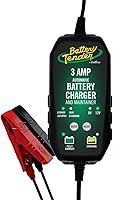
| Battery Tender 3A | routine storage care | 3A; switchable 6V or 12V | Lead-acid, AGM, gel and lithium; confirm lithium mode | Ring terminals and alligator clips | 8.6 |
| Battery Tender 5A 12V | occasional drivers | 5A; 12V | Lead-acid, AGM, gel and LiFePO4 | Ring terminals and alligator clips | 8.4 |
| Battery Tender 4A | shared garage use | 4A; switchable 6V or 12V | Lead-acid, AGM, gel and LiFePO4 | Ring terminals and alligator clips | 8.3 |
| Battery Tender 15A | larger battery recharges | Selectable 15A, 8A or 2A; 12V | Lead-acid, AGM, gel and LiFePO4 | 7.9 | |
| Battery Tender Plus 4-Bank | seasonal vehicle collections | 1.25A per bank; four banks | Lead-acid, AGM, gel and LiFePO4 | 7.8 | |
| Battery Tender 5A 12V/24V Onboard | mounted boat setups | 12V or 24V; confirm current for each voltage mode | Ring terminals and alligator clips | 7.4 |
The best battery tender picks for different owners
Choose the NOCO Genius5 for general use, then consider the other models for a specific storage or charging need. Each pick below includes a reason to buy it and a reason to choose something else.
NOCO Genius5: Best for mixed garages
- 5A charging
- 6V and 12V batteries
- Lead-acid and LiFePO4 support
- Temperature compensation
Choose this charger for a garage with different battery types and changing seasonal temperatures. Its thermal sensor adjusts charging to ambient conditions.
Pros
- Supports several lead-acid types and LiFePO4
- Thermal sensor adjusts charging for ambient temperature
- Includes clamps and eyelet terminals
Cons
- Manual Force Mode needs extra care
- Charges one battery at a time
The NOCO Genius5 fits a mixed garage where one charger may move between a car, motorcycle and lawn equipment. Its 5A output supports both charging and maintenance, and its temperature sensor adjusts charging for ambient conditions.
That sensor is a useful reason to choose it for a garage that changes with the seasons. It doesn't remove the need to follow the battery's temperature limits, especially with lithium batteries.
Clamps suit occasional connections, while the integrated eyelet terminals can make repeat use easier when installed correctly. The included mounting bracket also gives you a way to organize the unit near a regular charging spot.
Skip it if several batteries must remain connected together or your system needs a different voltage range. Its manual Force Mode can start charging a battery down to zero volts, but a battery that needs this mode first deserves a careful condition check.
For more detail on its controls and fit, read our NOCO Genius5 review.
Battery Tender 3A: Best for routine storage care
- 3A charging
- Switchable 6V or 12V
- Automatic float mode
- Ring terminal and alligator clip combo cable
A practical choice for keeping a compatible stored vehicle ready between outings. Push-button voltage selection also suits households with older and newer equipment.
Pros
- Switches between 6V and 12V
- Automatically enters float mode
- Battery Tender backs it with a 5-year manufacturer warranty
Cons
- Confirm the supported lithium chemistry before use
- Less charging output than the 4A and 5A options
The Battery Tender 3A is a sensible storage choice when the battery is usually healthy and you can give it time to charge. Its switchable voltage also helps if you alternate between older equipment and a modern vehicle.
Automatic float mode handles maintenance after the initial charge. A two-color LED shows charging status, and adaptive charging resumes full output if battery voltage falls too far under load.
This is a good fit for an owner who wants a straightforward routine rather than adjustable current or a detailed display. Battery Tender includes a ring-terminal and alligator-clip combo cable, so access to the battery can guide your connection choice.
Skip it when replacing a large amount of lost charge quickly is your main task. Also confirm the exact supported chemistry and charging mode before using it with a lithium battery.
For a vehicle that sits between planned outings, its appeal is simple: connect it correctly, confirm the status and allow enough charging time.
Battery Tender 5A 12V: Best for occasional drivers
- 5A charging
- 12V output
- Lead-acid, AGM, gel and LiFePO4 support
- Four-stage charging
For a compatible car that needs both recharging and storage maintenance, this model adds output without requiring voltage selection.
Pros
- Charges before switching to float mode
- Adaptive charging responds to falling battery voltage
- Battery Tender backs it with a 5-year manufacturer warranty
Cons
- Doesn't support 6V batteries
- Fixed output offers no lower-current selection
The Battery Tender 5A 12V suits an occasional driver whose car needs a recharge before entering storage. It offers more charging output than the 3A model without adding a voltage choice you may never use.
Its four-stage process covers qualification, bulk charging, absorption and float maintenance. That makes it useful for a battery that needs charge now and continued care while the vehicle sits.
Battery Tender designed this model for AGM batteries, with support for other compatible chemistries as well. The two-color status LED keeps the display simple, while adaptive charging responds when battery voltage drops under load.
Choose it when all the batteries you plan to charge use the same supported voltage and accept its fixed current. Skip it for older equipment that needs a different voltage or a small battery with a lower charging limit.
A safety timer adds a charging safeguard, but it isn't a reason to keep trying to recharge a battery that repeatedly fails to complete a cycle.
Battery Tender 4A: Best for shared garage use
- 4A charging
- Switchable 6V or 12V
- Lead-acid, AGM, gel and LiFePO4 support
- Automatic float mode
A useful charger to move between compatible vehicles and equipment. It combines selectable voltage with automatic maintenance and two connection styles.
Pros
- Switches between 6V and 12V
- Supports LiFePO4, AGM and gel batteries
- Battery Tender backs it with a 5-year warranty
Cons
- Maintains one battery at a time
- No selectable charging current
The Battery Tender 4A fits a shared garage where a charger moves between compatible vehicles and equipment. It combines switchable voltage with explicit LiFePO4 support, giving it a clear role alongside the simpler storage pick.
Its output sits between the smaller and larger fixed-current options. Choose it because it fits your batteries, rather than treating that middle position as a reason to buy by itself.
Automatic float mode maintains charge after the main cycle, and a two-color LED reports status. The included ring terminals and alligator clips let you use a regular connection point or attach the charger temporarily.
This model makes sense if you prefer Battery Tender and want more flexibility than the fixed-voltage option provides. Skip it if you need simultaneous charging, selectable current or a display with more charging information.
When several people use the same charger, make checking the mode part of every connection. Our NOCO Genius vs Battery Tender comparison explains the broader brand choice.
Battery Tender 15A: Best for larger battery recharges
- Selectable 15A, 8A or 2A output
- 12V charging
- LCD display
- Lead-acid, AGM, gel and LiFePO4 support
Choose this model when compatible batteries need more charging current and you want a visible readout. Lower settings let you reduce the rate when the battery requires it.
Pros
- Three selectable current levels
- LCD shows charging information and errors
- Battery Tender backs it with a 5-year manufacturer warranty
Cons
- Doesn't support 6V or 24V systems
- More controls than routine maintenance requires
The Battery Tender 15A is the pick for larger compatible batteries that need substantial recharging, especially when you want control over the rate. Its selectable 15A, 8A and 2A settings cover different charging needs within the battery's limits.
The LCD shows the selected rate, battery type, charge percentage and errors. That readout is useful when you want to confirm the setup at a glance or understand why a charging cycle has stopped.
Choose the rate from the battery instructions, not from how soon you want to leave. A small battery may require less current than even this charger's lowest setting, so adjustable output doesn't make it suitable for every battery.
Skip this model if your only job is maintaining one full battery through storage. The extra current and controls bring little benefit to that routine.
It also isn't a jump starter. Even at its highest setting, recharging takes time and depends on battery capacity, condition and the charge already remaining.
Battery Tender Plus 4-Bank: Best for seasonal vehicle collections
- Four 12V charging stations
- 1.25A per bank
- Lead-acid, AGM, gel and LiFePO4 support
- IP65 weather resistance
Four charging stations keep several stored vehicles connected at once. Its main advantage is simultaneous maintenance rather than fast recovery of a large discharged battery.
Pros
- Maintains up to four batteries simultaneously
- Includes separate connection cables
- IP65 weather resistant
Cons
- Low current per battery limits recharge speed
- For 12V batteries only
The Battery Tender Plus 4-Bank suits a collection of seasonal vehicles that would otherwise need several separate maintainers. Four stations can charge or maintain four compatible batteries at the same time.
Each bank supplies 1.25A, so the unit's combined output isn't available to one battery. Its strongest use is keeping several healthy batteries ready, rather than quickly refilling a large battery after heavy use.
Think about parking layout before buying it. Each battery needs its own routed lead, and the charger needs a suitable location that all four connections can reach without tension.
IP65 weather resistance helps protect against dust and water intrusion, but it doesn't permit submersion or override placement instructions. Keep the mains connection and any extension-cord connection protected too.
Skip it if you have one vehicle or mainly need faster recharging. For a collection, label each lead and check each charging station separately so a poor connection on one battery doesn't go unnoticed.
Battery Tender 5A 12V/24V Onboard: Best for mounted boat setups
- Onboard mounting
- Switchable 12V or 24V
- 5A and 2.5A charging options
- Ring terminals and alligator clips
Consider this charger for a permanent installation on compatible marine or industrial equipment. Confirm chemistry support, current by voltage mode and mounting requirements before choosing it.
Pros
- Supports 12V and 24V systems
- Integrated mounting capabilities
- Automatic float mode after charging
Cons
- Requires installation planning
- Battery Tender's manufacturer warranty is 2 years
The Battery Tender 5A 12V/24V Onboard is for an installed charging setup on compatible marine or industrial equipment. Integrated mounting capabilities give it a different purpose from a charger you carry between vehicles.
Start with the system layout, including battery chemistry, total voltage and where the charger will sit. Confirm the charging current available in each voltage mode before buying, since the mode details affect recharge planning.
A permanent installation can make repeat charging easier by leaving the battery leads in place. It also calls for more planning around cable routing, secure mounting, ventilation and access to power.
Skip it if you mainly need a portable garage charger or want several separate charging banks. Support for a higher system voltage doesn't mean it can maintain unrelated batteries independently.
For a series-connected bank, follow both equipment and charger wiring instructions. If you can't identify the approved connection points, have a qualified marine electrician plan the installation before you mount the unit.
How to choose the right battery tender for your battery
Match voltage, chemistry and permitted charging current before considering convenience features. Write down those three items from the battery label and instructions so similar charger names don't drive the decision.
Match voltage to the battery or bank
Read the battery label instead of guessing from the vehicle's age or size. A motorcycle, mower or older car may use a different voltage from the vehicle beside it.
With a multi-battery system, distinguish an individual battery from the whole bank. Batteries connected in series raise system voltage, while a charger connection must match the exact arrangement its instructions support.
Don't experiment with a higher voltage to make charging faster. If the system layout is unclear, resolve that before connecting a charger.
Match the charging mode to the chemistry
AGM and gel are lead-acid battery types, but their charging requirements can differ. LiFePO4 is a specific lithium chemistry, and a general reference to lithium doesn't cover every lithium battery.
Use the battery maker's charging guidance to choose the correct mode. Don't assume an automotive charger is suitable for a tool battery, an e-bike pack or another battery with a different chemistry and connection system.
For an AGM battery with unclear charging instructions, read whether you can charge an AGM battery with a regular charger.
Choose the best battery tender current for your routine
Maintenance needs less current than recharging because the charger is replacing small losses rather than filling a depleted battery. A low-output unit can suit storage yet take too long after a deep discharge.
For rough planning, a 60Ah battery at half charge has about 30Ah to replace. At 3A, that represents 10 hours before allowing for charging losses and the slower finishing stage.
Actual charging takes longer, and a battery's condition changes the result. A larger charger helps only if the battery can safely accept its output; our battery charger size guide explains that match.
Choose connections that fit access
Clamps make sense when you move the charger often and can reach the approved connection points. Ring-terminal leads can save effort when the battery sits behind a panel or stays on maintenance through a season.
Install permanent leads as the vehicle and charger instructions direct. Protect the positive terminal, secure the connector and route the wire away from exhaust parts, belts and sharp edges.
For any charger, measure the actual route to the outlet and battery. Combined AC and DC cord length isn't the same as usable reach on either side of the unit.
Do you need maintenance or a full recharge?
Choose maintenance for a healthy, charged battery in storage and more charging capacity when you regularly replace substantial lost charge. A tender can help with storage losses, but it won't solve every reason a vehicle fails to start.
A battery that repeatedly goes flat may have a vehicle electrical drain, a charging-system fault or internal damage. Recharging it again can hide the symptom without correcting the cause.
If you need a vehicle ready shortly after a deep discharge, a small maintenance unit may be the wrong tool. Our battery maintainer vs battery charger guide explains which job each type handles.
Manual recovery features need particular care because a charger may not identify a deeply discharged battery normally. Never use a recovery mode simply to bypass an unexplained warning.
Stop before charging a battery that is cracked, leaking, swollen or frozen. A charger can't restore damaged battery cases or make an unsafe battery suitable for use.
How to set up a battery tender correctly
Follow the charger, battery and vehicle instructions together, especially for approved connection points and mode selection. A repeatable setup is more useful than relying on memory each time.
- Inspect the battery and leads. Look for case damage, loose terminals, worn insulation and corrosion that prevents a sound connection.
- Turn the vehicle off. Switch off accessories and keep the charger's AC supply disconnected while attaching leads.
- Confirm voltage and chemistry. Check the battery label and select the proper mode at the stage directed by the charger instructions.
- Use the approved connection points. Some vehicles have remote terminals or require a particular ground point to work with their battery monitoring system.
- Place the charger securely. Keep ventilation openings clear, avoid placing it on the battery and keep cables away from moving or hot parts.
- Connect power and check status. Confirm that the charger recognizes the battery and begins the expected cycle.
- Check the setup again later. Watch for error lights, loose leads, unusual heat, swelling or a strong odor before leaving it on extended maintenance.
Charging lead-acid batteries requires ventilation because they can release gas. Keep flames, smoking materials and sparks away, and use eye protection when working around the battery.
Reverse-polarity and spark-proof features are backup protections, not a substitute for correct connections. When disconnecting, turn off AC power first and follow the stated lead-removal order.
How to care for a battery during long storage
Inspect the battery and charging setup periodically, even when the charger allows continuous connection. Automatic maintenance controls charge; they don't prevent loose cables, water exposure or physical damage.
Check the charger's status and make sure the outlet still has power. After a power interruption, verify that the unit returns to the correct operating state rather than assuming it resumed as expected.
Keep terminals clean and permanent leads secure. If the battery is a serviceable flooded type, follow its instructions for electrolyte checks; don't open sealed AGM, gel or lithium batteries.
Temperature matters beyond charger output. A temperature sensor doesn't authorize charging outside the battery's allowed range, and lithium batteries may have cold-weather charging limits that require special attention.
Keep a charging cord visible or use a reminder so nobody drives away while connected. Disconnect and secure the leads before starting or moving the vehicle.
For seasonal storage, pair battery care with the rest of the vehicle's preparation. Our guide to winterizing a car for storage explains how the battery routine fits that work.
Common battery tender mistakes to avoid
Most poor choices start with a mismatch between the battery and the job. These checks help prevent buying extra features while missing a basic requirement.
- Choosing only by vehicle type. Two cars can have different battery chemistries, capacities and charging limits, so check the battery itself.
- Using the highest current by default. Start with the battery's permitted charging rate rather than the charger's maximum output.
- Leaving accessories running. An ongoing load can consume charging current and prevent the battery from reaching a full charge.
- Expecting a quick engine start. A maintainer supplies charge over time; it doesn't provide the burst of current from a jump starter.
- Reading one status light as a battery diagnosis. Completing a charging cycle doesn't prove the battery can deliver enough starting current.
- Combining charging banks. Don't connect separate outputs together to increase current unless the manufacturer explicitly permits that arrangement.
- Treating weather resistance as complete protection. Charger housings, connectors and AC connections can have different exposure limits.
- Ignoring repeated errors. Stop and identify the fault instead of repeatedly resetting the charger or forcing a different mode.
If a vehicle still struggles to start after a proper charge, check battery condition and the vehicle's starting and charging systems. Buying a larger tender is unlikely to solve that problem by itself.
Which best battery tender fits your situation?
Choose the best battery tender by the job you'll repeat most often. Use these decision rules once you've confirmed battery compatibility.
- Mixed garage and seasonal temperature changes: Choose the NOCO Genius5 for its charging flexibility and thermal sensor.
- Routine care for a stored vehicle: Choose the Battery Tender 3A when modest charging output meets your battery's needs.
- An occasional driver's compatible car: Choose the Battery Tender 5A 12V when you want charging followed by maintenance without voltage selection.
- A charger shared between equipment: Choose the Battery Tender 4A for selectable voltage and its supported chemistry range.
- Larger batteries that need recharging: Choose the Battery Tender 15A when the battery accepts its selected rate and you want an LCD.
- Several seasonal vehicles: Choose the Battery Tender Plus 4-Bank to keep separate batteries connected together.
- A permanent marine setup: Choose the Battery Tender 5A 12V/24V Onboard after confirming the system and installation requirements.
Before ordering, settle the practical details: battery type, allowed current, charging location and cable reach. Then follow our guide on how to hook up a battery tender to prepare the connection.
Our top 3 picks at a glance
-
1
-
2
-
3
Frequently asked questions
What is the best battery tender for most people?
The NOCO Genius5 is the best battery tender for most buyers with compatible batteries because it combines charging, maintenance and temperature compensation. It suits a garage with different battery types, while a multi-bank charger makes more sense if several stored vehicles need to stay connected at once.
How many amps should a battery tender have?
Choose a charging current within your battery manufacturer's limits, then consider how quickly you need to replace lost charge. Maintaining a full battery takes less current than recharging a depleted one.
Our guide to choosing the right battery tender explains how capacity, chemistry and storage habits affect the choice.
Can a battery tender charge a dead battery?
Some smart chargers can recharge a deeply discharged battery, but they cannot repair every failed battery. The NOCO Genius5 includes a manual Force Mode for batteries down to zero volts; use it only as directed.
Read whether a battery tender can charge a dead battery before attempting recovery.
Can you leave a battery tender connected all the time?
You can leave a compatible smart maintainer connected when the charger and battery instructions allow continuous maintenance. Keep the unit ventilated, protect its connections and inspect the battery and cables regularly.
Our guide to leaving a battery tender connected explains the checks that still matter during storage.
Is a battery tender the same as a trickle charger?
A smart battery tender adjusts charging as the battery fills, while a basic continuous trickle charger may keep supplying current. Choose by the actual charging controls rather than the name on the box.
Read battery tender vs. trickle charger to understand which approach suits long-term storage.