Battery Tender vs NOCO Genius: Which Is Better? (October 2026)
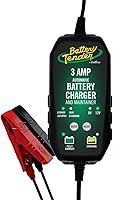
For Battery Tender vs NOCO, choose NOCO Genius5 for broader charging tools and temperature compensation. Choose Battery Tender 3A for routine storage care, or Battery Tender 4A for more charging current and explicit LiFePO4 support.
On this page (11 sections)
- Battery Tender vs NOCO: which should you choose?
- Which battery types can these chargers handle?
- How much does charging current change the decision?
- What extra charging tools does NOCO provide?
- Which charger makes the most sense for storage?
- How should you handle a deeply discharged battery?
- How do the cables and connections affect daily use?
- How do you set up either brand correctly?
- Which common mistakes should you avoid?
- Do warranty length and protection features change the choice?
- Battery Tender vs NOCO: make the final choice
Choose NOCO Genius5 for varied charging jobs and Battery Tender for routine charging and storage maintenance. The Battery Tender vs NOCO decision starts with your battery's chemistry, its condition and how quickly you need it ready.
A healthy battery in a parked car needs a different kind of help from a deeply discharged battery. Extra recovery tools matter for the second job, while reliable automatic maintenance matters most for the first.
These are comparisons of 3 specific models, not every charger either brand makes. Each can charge and maintain compatible batteries, but their output and special features give them different roles.


Battery Tender vs NOCO: which should you choose?
Choose NOCO Genius5 for flexibility, Battery Tender 3A for seasonal storage, or Battery Tender 4A for maintenance with occasional recharging. Buy for your regular job before paying attention to features you may never use.
NOCO vs Battery Tender for a mixed garage
The Genius5 is the strongest choice if you move a charger between several compatible vehicles. Its combination of battery support, temperature adjustment and low-voltage charging tools covers more situations than basic storage care.
Skip it if your only task is maintaining one healthy battery and you prefer a simpler routine. More modes add value only when you understand which ones your battery needs.
Battery Tender 3A for a vehicle that sits
The 3A model suits a seasonal car, mower or other vehicle whose compatible battery is healthy but loses charge between uses. It charges first, then moves automatically into float maintenance.
Skip it if you often need to replenish a large, depleted battery within a short window. Its lower current makes it better suited to patient charging and ongoing care.
Battery Tender 4A for maintenance plus recharging
The 4A model fits someone who wants the Battery Tender approach with a little more charging current. It makes sense when a stored vehicle occasionally needs more than a small top-up.
Skip it if you specifically need NOCO's manual low-voltage mode. If you already have a suitable maintainer, a small increase in current alone may not justify replacing it.
Which battery types can these chargers handle?
All 3 support 6V and 12V batteries, including flooded lead-acid, AGM and gel types. NOCO Genius5 and Battery Tender 4A also explicitly support LiFePO4, while the 3A model's exact lithium chemistry needs confirmation.
Read the battery label before buying, especially on motorcycles, boats and vehicles with replacement batteries. The vehicle model doesn't prove which chemistry is installed now.
Voltage and chemistry are separate checks. A charger that supports both voltages and several chemistries does not necessarily support every possible combination.
For lithium, match the exact battery chemistry and approved voltage setting in the charger manual. Don't use a lead-acid repair routine on a lithium battery or assume every lithium battery uses a LiFePO4 profile.
Also check the battery maker's allowed charging current. A small powersport battery may need a lower current than a larger automotive battery, even when both share the same voltage.
If you cannot identify the battery or its charging limits, settle that before ordering. Brand preference cannot make an incompatible charger suitable.
How much does charging current change the decision?
Higher current generally shortens the main charging stage on the same compatible battery. The outputs here are 5 A for Genius5, 3 A for Battery Tender 3A and 4 A for Battery Tender 4A.
That difference matters most when replacing a meaningful amount of lost charge. During storage maintenance, the battery usually needs much less energy, so maximum output becomes less important.
For a rough planning example, replacing 20 amp-hours takes at least about 4 hours at 5 amps or nearly 7 hours at 3 amps. Actual charging takes longer because current can taper and charging is not perfectly efficient.
Those figures are planning estimates, not promised completion times. Battery size, starting charge, condition, temperature and the charger's charging stages all affect the result.
A large deep-cycle battery discharged after use may keep any of these chargers busy for a long time. If fast turnaround is your main requirement, use our guide to what size battery charger you need before choosing.
None of these should be treated as an immediate engine-start solution. A plug-in charger needs time to put energy back into the battery.
What extra charging tools does NOCO provide?
The Genius5 adds temperature compensation and low-voltage charging options that matter beyond ordinary float care. Those are the main reasons to choose it over a Battery Tender for a more varied workload.
Its thermal sensor adjusts charging based on ambient temperature. NOCO says this helps limit overcharging in hot conditions and undercharging in cold conditions.
That feature is useful in a garage where temperatures change through the year. It does not make a frozen battery safe to charge or remove the need to follow the battery's temperature limits.
Genius5 can begin charging from as low as 1 volt, with manual Force Mode available down to zero volts. Use that mode only as directed after confirming the battery's type, voltage and condition.
NOCO also describes a pulse-charging feature intended to address sulfation and acid stratification. Treat it as a recovery tool for suitable batteries, not a reason to keep a worn-out battery in service.
Our NOCO Genius5 review covers this model in more detail. If charging time is driving your decision, NOCO Genius5 vs Genius10 compares the next step in output.
Which charger makes the most sense for storage?
For a healthy, compatible battery that spends weeks parked, Battery Tender 3A covers the core storage job. Its automatic float mode maintains charge after the initial charging stage.
Both Battery Tender models use a two-color status LED and adaptive charging that resumes full output when battery voltage drops far enough under load. That helps manage changing maintenance needs without manual charging cycles.
NOCO says Genius5 continually monitors the battery and can remain connected indefinitely for maintenance. Follow its instructions and inspect the setup periodically rather than treating any charger as something to ignore for months.
Start storage with a charged battery whenever possible. Leaving a battery deeply discharged while you arrange a maintainer can make later recovery harder.
Remember that vehicle electronics may continue drawing power while parked. If charge keeps falling or the charger never reaches maintenance, look for a battery problem, an unusual draw or a poor connection.
Our Best Battery Tender guide covers more storage options. If the terms are confusing, what a battery maintainer does explains its role between drives.
How should you handle a deeply discharged battery?
Choose recovery features only after checking whether the battery is suitable to charge. Low voltage can reflect neglect, but it can also point to damage or a battery that needs replacement.
Do not charge a battery that is swollen, leaking, cracked or frozen. Stop if the battery becomes unusually hot, vents heavily or produces a strong unusual odor.
A charger that refuses to start is not automatically faulty. Check power, connections, polarity and the selected mode before assuming it needs a manual override.
Force Mode is a specific tool, not the normal first step for every flat battery. Identify why automatic charging will not begin and follow NOCO's instructions before using it.
The Battery Tender models' adaptive charging serves a different purpose: resuming output when voltage drops during use. Do not assume that behavior gives them the same zero-volt charging ability.
After charging, check whether the battery holds charge and can do its job. Repeated discharge or weak starting calls for a battery and vehicle-system check, rather than repeated recovery attempts.
How do the cables and connections affect daily use?
Choose ring terminals for repeated access and clamps for moving the charger between batteries. All 3 include both connection options, although NOCO integrates eyelet terminals with its clamps.
Genius5 includes a 72-inch AC cable and an 80-inch DC cable. Each Battery Tender has a 6 ft AC cord and a 5 ft DC cord, for 11 ft of combined reach.
Combined reach is not the same as the distance available on either side of the charger. Plan where the charger will sit and measure the outlet-to-charger and charger-to-battery runs separately.
Ring terminals can make routine connection easier when battery access is awkward, provided they are installed and routed as directed. Keep the connector away from belts, fans, exhaust parts and sharp edges.
Clamps suit temporary work, but they need firm contact at the correct connection points. A loose clamp can interrupt charging even when the selected mode is correct.
The Genius5 also includes a mounting bracket and screws. A fixed location can help organize a regular charging spot, provided the mounting and ventilation meet its instructions.
How do you set up either brand correctly?
Start with the battery and vehicle instructions, then follow the charger's connection sequence. Correct setup matters more than choosing between two compatible brands.
- Identify the battery. Confirm voltage, chemistry and allowed charging current before selecting a mode.
- Check its condition. Look for case damage, leaks and terminals that need attention before attaching leads.
- Choose the location. Use a stable surface with ventilation and keep the charger within its permitted operating conditions.
- Connect with AC power off. Follow the manual's polarity and grounding directions, including the specified chassis point when required.
- Select the matching mode. Read the labels carefully instead of choosing a mode because it sounds more powerful.
- Confirm charging begins. Check the status indication and connection before leaving the setup for a longer period.
- Disconnect as directed. Remove AC power before removing battery connections, following the manual's sequence.
Do not close a hood on a cable or leave leads where someone can trip over them. A tidy cable route also makes damage easier to spot during later checks.
For connection details, follow our guide to how to hook up a Battery Tender. Our broader guide to how to charge a car battery helps with the vehicle-specific preparation.
Which common mistakes should you avoid?
Avoid choosing by brand before checking compatibility. The right logo cannot correct the wrong voltage, chemistry or charging current.
Do not select AGM just because it sounds like an upgraded charging mode. Use it for an AGM battery when the charger instructions direct you to do so.
Do not assume maximum current flows through the entire charging cycle. A slower final stage can be normal, so unplugging early may leave the battery short of a full charge.
Avoid treating a maintenance indicator as proof that the battery can start an engine. Charge state and the ability to deliver starting power are different checks.
Keep the charger and cables clean, inspect insulation and store disconnected leads without tight bends or crushing. Follow the battery's care instructions, and do not open sealed AGM or gel batteries to add water.
For long storage, check the setup after power interruptions and inspect connections periodically. Repeated faults deserve attention rather than repeated resets.
Do warranty length and protection features change the choice?
Use warranty and protection features as tie-breakers after confirming the charger fits your battery and routine. Battery Tender backs both models with a 5-year warranty, while NOCO backs Genius5 with a 3-year limited warranty.
Both Battery Tender models have spark-proof lead connection and reverse-polarity detection. These protections help with connection mistakes but do not replace correct polarity or a sound battery.
Keep your receipt and review the warranty terms for the exact unit. A longer warranty is useful, but it will not shorten charging time or add a mode your battery needs.
For ongoing connection, read whether a Battery Tender can stay connected all the time. The practical checks apply even when automatic maintenance is the main reason you bought the charger.
Battery Tender vs NOCO: make the final choice
For Battery Tender vs NOCO, choose the model that handles your normal routine with the fewest compromises. Recovery tools, charging time and storage care should each earn their place in the decision.
Choose Genius5 if you share one charger across compatible vehicles or need its temperature adjustment and low-voltage tools. Choose Battery Tender 3A for patient charging and seasonal maintenance of a healthy battery.
Choose Battery Tender 4A if you prefer its automatic float approach but want more current than the 3A model. Its explicit LiFePO4 support also makes compatibility clearer for that chemistry.
Compare the 3 charger choices
The table puts the main differences together so you can check your preferred model against your battery. Confirm compatibility first, then decide whether extra charging tools serve a job you actually have.
| Product | Best for | Output | Voltage | Battery types | Our score |
|---|---|---|---|---|---|
| NOCO Genius5 | mixed vehicle garages | 5 A | 6V and 12V | Lead-acid and LiFePO4 | 9.2 |
| Battery Tender 3A | seasonal vehicle storage | 3 A | 6V and 12V | Lead-acid, AGM and gel; confirm lithium chemistry | 8.6 |
| Battery Tender 4A | occasional recharge needs | 4 A | 6V and 12V | Lead-acid and LiFePO4 | 8.3 |
If your main uncertainty is keeping a parked battery charged versus replenishing one after use, read battery maintainer vs battery charger. That distinction will help you choose more reliably than brand preference alone.
Frequently asked questions
Is NOCO Genius better than Battery Tender?
NOCO Genius5 is the better fit for varied charging jobs, temperature compensation and low-voltage charging; Battery Tender 3A suits a healthy battery kept in storage, while Battery Tender 4A adds charging current and explicit LiFePO4 support. Choose by battery compatibility and use rather than brand alone.
Can Battery Tender and NOCO Genius charge AGM batteries?
Yes, all 3 chargers support AGM batteries; match the battery's voltage and follow its charging instructions before selecting a mode. AGM is a type of lead-acid battery, but that doesn't make every lead-acid setting interchangeable; use the setting directed by the charger manual for your battery.
Can these chargers recover a completely dead battery?
NOCO Genius5 offers manual Force Mode for supplying charge down to zero volts, but successful recovery depends on battery condition. A battery that accepts charge may still fail to hold it or start an engine; have a questionable battery checked, and never charge one that is swollen, leaking or frozen.
Which charger supports lithium batteries?
NOCO Genius5 and Battery Tender 4A explicitly support LiFePO4 batteries; Battery Tender 3A names lithium compatibility, but confirm its exact supported chemistry before use. Match the battery's voltage, chemistry and charging limits to the charger manual; a lithium label alone is not enough to select a charging mode.
Can you leave a NOCO Genius5 connected?
NOCO says Genius5 can remain connected indefinitely for ongoing maintenance when used as directed; check the battery, connections and charger status periodically, and follow both manuals. Our guide to whether you can leave a Battery Tender on all the time explains the practical checks for long storage periods.