Battery Tender vs Trickle Charger: Which Is Better? (October 2026)
For battery tender vs trickle charger, choose automatic maintenance for long-term storage. The Battery Tender 4A charges and then switches to float mode; a basic continuous trickle charger needs the connection limits and monitoring its manual requires.
On this page (12 sections)
- Battery Tender vs trickle charger: what is the difference?
- Which charger fits your storage routine?
- Who should choose the Battery Tender 4A?
- When do the NOCO Genius5 and CTEK CT5 make more sense?
- How do you match a charger to your battery?
- Does a trickle charger charge faster?
- How should you set up a charger for storage?
- What care does a connected maintainer need?
- Which charging mistakes should you avoid?
- Sources
- FAQ
- Which should you choose: Battery Tender or trickle charger?
For battery tender vs trickle charger, choose automatic maintenance for a vehicle that will sit for weeks or months. A basic continuous trickle charger makes sense only when you can follow its time limits and monitor charging.
Battery Tender is a brand, while “trickle charger” can describe both basic chargers and smart models. The useful difference is what happens after the battery becomes full.
The Battery Tender 4A switches to float maintenance instead of continuing the initial charge. Before buying any charger, match its voltage, chemistry support and charging current to your battery.


Battery Tender vs trickle charger: what is the difference?
Automatic maintenance controls the charge after the battery is full, while a basic trickle charger may keep supplying current. That difference matters more than the words printed on the box.
A traditional trickle charger feeds a small current into the battery. If that current continues after a lead-acid battery is full, prolonged charging can cause heat, water loss and battery damage.
Float maintenance holds a suitable maintenance voltage after charging. Other smart chargers may monitor the battery and restart charging as needed, so not every automatic model works in exactly the same way.
A low amp number doesn't prove that a charger is suitable for months of connection. Look for clear instructions covering storage maintenance, supported battery types and any required checks.
Our guide to what a trickle charger is explains the term in more detail.
Does the Battery Tender vs trickle charger label settle the choice?
No, compare the exact models and their controls. A smart charger sold as a trickle charger may serve the same storage need as a maintainer.
None of the 3 products here is a basic continuous-output trickle-only unit. They offer alternatives for buyers who want automatic charging or maintenance features.
Which charger fits your storage routine?
Choose automatic maintenance for extended storage, especially when you won't be present to stop a charging session. Keep a basic trickle charger for supervised use within its instructions.
A weekend car, seasonal motorcycle or mower stored through winter needs help replacing charge lost while idle. A compatible maintainer can serve that role without requiring you to guess when a basic charging session should end.
If you already own a basic trickle charger, check its manual before replacing it. It may be useful for occasional charging, but don't turn a time-limited charger into a permanent storage setup.
A vehicle driven often may not need a maintainer at all. If it repeatedly struggles to start despite regular driving, investigate the battery, charging system or electrical drain instead of relying on a charger between every trip.
Storage also requires planning for the whole vehicle. Our car winterization guide covers battery care alongside other preparation.
Who should choose the Battery Tender 4A?
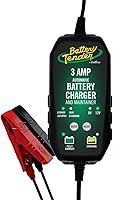
Choose the Battery Tender 4A for routine charging followed by storage maintenance. It fits buyers who want to keep a compatible vehicle ready between uses without adding recovery modes to the decision.
It delivers 4 A and supports switchable 6V or 12V operation with compatible flooded lead-acid, AGM, gel and LiFePO4 batteries. Match both voltage and chemistry before connecting.
After a full charge, it changes to float mode. Its adaptive charging resumes full output if battery voltage drops too far under load, and a two-color LED shows charging status.
The included ring terminals suit a recurring connection, while the clamps help when moving between batteries. Measure the outlet-to-battery route before buying, allowing room to keep cords away from sharp edges and moving parts.
Skip it if your main job is rapidly recharging a large, depleted battery. Also choose another charger if your battery requires a charging profile outside its supported settings.
When do the NOCO Genius5 and CTEK CT5 make more sense?
Choose the NOCO for temperature-aware charging, or consider the CTEK for a compatible powersports battery. Both deserve a place on the shortlist when their features match your routine.
NOCO Genius5 for a garage with temperature swings
The Genius5 has a thermal sensor that adjusts charging based on ambient temperature. That is a useful reason to choose it for a garage that gets warmer or colder over the storage season.
Its 5 A output serves charging as well as maintenance, with support for compatible 6V and 12V lead-acid and LiFePO4 batteries. It includes a mounting bracket for a regular charging location.
NOCO says it can begin charging from 1 volt, with manual Force Mode available down to zero volts. Treat that as a separate recovery task, not a routine step for every discharged battery.
Skip it if your existing compatible maintainer already handles storage and you have no need for the extra functions. Force Mode is also a poor reason to buy if you aren't prepared to identify the battery and follow the manual carefully.
CTEK CT5 for a stored motorcycle or ATV
The CT5 suits compatible 12V motorcycle, ATV, JetSki and snowmobile batteries. It supports lead-acid and LiFePO4 batteries, with normal mode optimized for lead-acid types, including AGM.
Its charging output is about 1 A, so allow time rather than expecting a quick recharge. Confirm that this current fits your particular battery's charging guidance.
Recond mode is available for compatible deeply discharged batteries. Don't assume a recovery mode is suitable for lithium or every lead-acid battery just because the charger supports those chemistries in other modes.
Skip the CT5 for a 6V battery or when fast turnaround is your main need.
How do you match a charger to your battery?
Check voltage, chemistry and allowed charging current before comparing extras. A charger must meet all 3 needs, even when it supports your vehicle type.
Start with the battery label and manual. “Car battery” or “motorcycle battery” doesn't identify the chemistry, and lithium support here means the specified LiFePO4 type rather than every lithium battery.
Next, check battery capacity in amp-hours and the battery maker's charging limits. A small powersports battery may need less current than a large automotive battery, so higher output isn't automatically better.
For AGM batteries, use the approved setting and charging guidance. Our guide to charging an AGM battery with a regular charger explains why a basic charger can be the wrong match.
Then decide whether you need maintenance, recharging or both. Read battery maintainer vs battery charger if those jobs are still unclear, and use our battery charger sizing guide to narrow the output.
Does a trickle charger charge faster?
No, “trickle” usually means slow charging, and the label doesn't predict a finish time. Battery capacity, starting charge, temperature and charging controls all affect the wait.
For a rough planning example, replacing 30 Ah at a steady 3 A would take 10 hours before allowing for losses and the slower final charging stage. Real charging takes longer because output doesn't stay constant throughout the process.
Maintenance is a different job from replacing a large amount of lost charge. A low-output charger can suit storage while being inconvenient when you need the vehicle again soon.
Don't plan around one universal “overnight” promise. Our guide to how long a car battery takes to charge explains how to estimate the time for your situation.
How should you set up a charger for storage?
Use a dry, ventilated charging location and follow the connection instructions for the vehicle and charger. Correct setup matters even when the charger has automatic controls.
- Inspect the battery. Don't charge a frozen, swollen, leaking or visibly damaged battery.
- Check the charging location. Keep flames and sparks away, and don't cover the charger or block ventilation.
- Identify the connection points. Some vehicles require designated charging terminals or a specific ground point.
- Connect with AC power unplugged. Follow the required lead order, polarity and mode-selection steps.
- Route the cables safely. Keep them clear of belts, fans, hot parts, sharp edges and places where a hood could pinch them.
- Confirm normal operation. Check that the indicator shows the expected charging state before leaving the setup.
For detailed connection guidance, read how to hook up a Battery Tender. When disconnecting, unplug AC power first and follow the manual's lead-removal order.
Battery Tender describes the 4A's lead connection as spark-proof, and it has reverse-polarity detection. Those protections don't replace careful polarity checks or safe battery handling.
If you install ring terminals for recurring use, follow the instructions for fastening and protecting them. Keep the loose connector secured away from metal surfaces and moving parts when the charger is disconnected.
What care does a connected maintainer need?
Check the battery, cables and status indicator periodically, even with automatic maintenance. A storage charger still needs a sound battery and a safe connection.
Look for loose terminals, cable damage, corrosion and changes in the battery case. Stop charging if you notice unusual heat, swelling or leaks, and get the battery checked before reconnecting.
Learn what the indicator means rather than assuming any light means “ready.” A charger that never reaches maintenance or repeatedly shows an error needs attention.
If a flooded battery has serviceable caps, follow its maker's electrolyte-checking instructions. Don't open sealed AGM, gel or lithium batteries.
After a power interruption, confirm that charging has resumed in the correct mode. For longer storage periods, our guide to leaving a Battery Tender connected covers the checks to plan.
Which charging mistakes should you avoid?
Avoid continuous charging without clear limits, wrong battery settings and repeated recovery attempts. These mistakes can turn a simple storage job into a battery problem.
- Assuming low current prevents overcharging. A basic charger can still keep feeding a full battery.
- Choosing by vehicle size alone. Battery chemistry, capacity and charging limits are more useful than “car” or “truck” on the packaging.
- Using recovery modes by default. Force Mode and Recond need separate instructions and compatibility checks.
- Expecting maintenance to repair a fault. A charger won't fix a vehicle drain or guarantee recovery of a worn-out battery.
- Driving away while connected. Make disconnecting and securing the lead part of your pre-drive routine.
If a battery repeatedly goes flat after a full charge, have the battery and vehicle checked. Repeated charging can hide the symptom while leaving the cause unresolved.
Sources
Use manufacturer instructions for model-specific operation and battery safety guidance for the charging location. Your battery and vehicle manuals also govern the connection method.
- Battery Tender 4A product information
- Battery safety guidance from the National Fire Protection Association
FAQ
Charging controls and battery compatibility settle most questions about storage use. These answers cover the main differences.
Is a Battery Tender the same as a trickle charger?
No. Battery Tender is a brand, while trickle charger is a broad term for low-current charging equipment.
The Battery Tender 4A changes to float maintenance after charging, but a basic trickle charger may keep delivering current. Compare full-charge behavior and storage instructions before choosing.
Can you leave a Battery Tender connected?
The Battery Tender 4A is designed for charging followed by float maintenance. Leave it connected only with a compatible battery and according to the charger and vehicle instructions.
Check the indicator, leads and battery condition periodically, and investigate unusual heat, swelling, leaks or repeated failure to reach maintenance.
Is a trickle charger safe for long-term storage?
A trickle charger suits long-term storage only if its controls and instructions support that use. A basic continuous-output unit can keep charging a full battery, so low current alone is not enough.
Choose automatic maintenance for extended storage and follow the required checks and connection limits.
Which is better for an AGM battery?
Choose a charger that explicitly supports AGM, matches the battery voltage and allows a suitable charging current. All 3 models here support compatible AGM batteries, but their voltage ranges and controls differ.
Follow the battery maker's charging guidance, and confirm any recovery mode separately before using it.
Can a trickle charger charge a dead battery?
Some can recharge a discharged battery, but low current means a slow process and some chargers cannot recognize very low voltage. NOCO says the Genius5 starts from 1 volt and has manual Force Mode down to zero volts.
Neither function guarantees that a damaged battery will recover.
Which should you choose: Battery Tender or trickle charger?
For battery tender vs trickle charger, pick automatic maintenance when storage is the main job. Choose a basic trickle charger only for a charging session you can monitor within its stated limits.
Pick the Battery Tender 4A for routine charging and float maintenance, the NOCO Genius5 when temperature adjustment matters, or the CTEK CT5 for a compatible powersports battery when you can allow a slower charge.
Before ordering, confirm the battery label and the charging location. If both smart chargers fit, our Battery Tender vs NOCO comparison can help you make the final choice.
Frequently asked questions
Is a Battery Tender the same as a trickle charger?
No. Battery Tender is a brand, while trickle charger is a broad term for low-current charging equipment.
The Battery Tender 4A changes to float maintenance after charging, but a basic trickle charger may keep delivering current.
Compare full-charge behavior and storage instructions before choosing.
Can you leave a Battery Tender connected?
The Battery Tender 4A is designed for charging followed by float maintenance. Leave it connected only with a compatible battery and according to the charger and vehicle instructions.
Check the indicator, leads and battery condition periodically, and investigate unusual heat, swelling, leaks or repeated failure to reach maintenance.
Is a trickle charger safe for long-term storage?
A trickle charger suits long-term storage only if its controls and instructions support that use. A basic continuous-output unit can keep charging a full battery, so low current alone is not enough.
Choose automatic maintenance for extended storage and follow the required checks and connection limits.
Which is better for an AGM battery?
Choose a charger that explicitly supports AGM, matches the battery voltage and allows a suitable charging current. All 3 models here support compatible AGM batteries, but their voltage ranges and controls differ.
Follow the battery maker's charging guidance, and confirm any recovery mode separately before using it.
Can a trickle charger charge a dead battery?
Some can recharge a discharged battery, but low current means a slow process and some chargers cannot recognize very low voltage. NOCO says the Genius5 starts from 1 volt and has manual Force Mode down to zero volts.
Neither function guarantees that a damaged battery will recover.