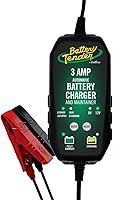
Will a Battery Tender Charge a Dead Battery?
Yes, a battery tender can charge a battery if it is recoverable and compatible with the device's charging mode. A low-output maintainer may recharge it slowly or fail to detect it when deeply discharged.
On this page (8 sections)
- Will a battery tender charge a battery that's dead?
- How can you tell whether the battery is discharged or failed?
- How do you choose between a maintainer and a charger?
- How do you set up a battery tender for charging?
- How long will a battery tender take to recharge a battery?
- What mistakes stop a battery tender from charging properly?
- Can you leave a battery tender connected during storage?
- Which charging option should you choose?
Yes, a battery tender will charge a battery if the battery is recoverable and the device supports its voltage, chemistry, and charge level. A small maintainer may replenish a weak battery slowly, but it may not recognize one that is deeply discharged.
“Battery tender” often means a storage maintainer, though some devices combine charging and maintenance. Choose by the battery's needs and the device's charging modes, rather than the name on the box.
Will a battery tender charge a battery that's dead?
It can recharge a discharged battery, but it cannot make every failed battery usable again. The key questions are whether the charger can begin charging and whether the battery can store enough energy afterward.
“Dead” might mean lights were left on overnight, or it might mean internal damage has left the battery unable to hold a charge. A recovery feature cannot guarantee reliable starts.
Some automatic chargers need a minimum detectable voltage before they begin. A standby light or error message therefore needs a manual check, rather than an immediate switch to a stronger mode.
For the basic differences, see what a battery maintainer is and how a trickle charger works. A device intended only to offset storage losses may be a poor choice for routine recharging.
Can a battery tender charge a battery with almost no voltage?
Only a charger with a suitable low-voltage charging mode may be able to start. Even then, low voltage does not tell you whether the battery is safe or worth recovering.
Have an unfamiliar or long-neglected battery checked before attempting recovery. Never connect another battery simply to fool a charger into recognizing one it has rejected.
How can you tell whether the battery is discharged or failed?
A battery that accepts and holds a charge may simply have been discharged; one that quickly loses charge needs further checks. Voltage alone cannot confirm battery health, especially its ability to start an engine.
Look for a clear cause, such as an interior light left on or months without use. A cracked, swollen, leaking, frozen, or unusually hot battery should not be charged.
Repeated discharge can also come from an electrical drain or a vehicle charging-system fault. Replacing the charger won't solve those problems, so arrange a battery and vehicle check if the pattern continues.
How do you choose between a maintainer and a charger?
Choose a maintainer for storage and a charger with an appropriate output for a discharged battery. A combined unit suits you if you need to recharge now and maintain the battery afterward.
Check these points before buying:
- Voltage: Match the battery's nominal voltage, rather than guessing from the vehicle's size.
- Chemistry: Flooded lead-acid, AGM, gel, and LiFePO4 batteries can need different charging profiles.
- Capacity and permitted current: Check the battery's amp-hour capacity and charging instructions before choosing an output.
- Starting voltage: Deep discharge may require a mode that an ordinary maintainer lacks.
- Connection method: Clamps suit occasional charging; compatible eyelet connections can simplify repeated storage use.
A higher amp setting is useful only when the battery permits it. Small motorcycle and lawn equipment batteries may require less current than larger vehicle batteries.
The battery maintainer and charger guide compares options across cars, trucks, and boats. Use the battery maintainer versus battery charger guide if you're still deciding which job you need the device to do.
Which charger suits your battery and routine?
These 3 devices combine charging and maintenance, but each fits a different routine. Choose the functions you'll use, then confirm compatibility with the battery.
Schumacher SC1281 6A: for drivers who need charging and starting help. It combines microprocessor-controlled 2A to 6A charging, 12A to 30A boost, and a 100A engine-start function.
It supports 6V and 12V standard, AGM, gel, and deep-cycle batteries. This suits a garage where occasional charging and engine-start assistance matter more than a simple storage connection.
Skip it if you only need to keep one small battery topped up and won't use the extra functions. Engine-start assistance requires external power and the correct procedure; it isn't a substitute for fully charging a depleted battery.
NOCO Genius10: for owners dealing with deeply discharged batteries. It offers 10A charging, can begin from 1 volt, and includes manual Force Mode down to zero volts.
It supports 6V and 12V lead-acid batteries and LiFePO4 charging, with the correct mode required for each battery. Its thermal sensor adjusts charging for ambient temperature, while clamps and integrated eyelet terminals suit occasional and repeated connections.
Skip it if your battery requires a lower charge current than this model allows. Force Mode also demands careful use of the manual; it should never be a routine response to an unexplained fault.
Clore PL2320 20A: for garages charging different lead-acid battery sizes. Its selectable 2A, 10A, and 20A rates let you choose an output within each battery's permitted range.
It provides automatic multi-phase charging and maintenance for 6V and 12V lead-acid batteries, including flooded, AGM, and gel types. Its separate power-supply mode is useful only for jobs that call for stable system voltage and allow that mode.
Skip it for LiFePO4 charging, since its stated compatibility covers lead-acid batteries. Choose it for adjustable charging current, rather than assuming the highest setting belongs on every battery.
How do you set up a battery tender for charging?
Match the battery settings and connection points before powering the charger. Follow both the charger and vehicle manuals, since some vehicles have designated charging terminals.
- Read the battery label for voltage, chemistry, and charging limits.
- Inspect the case, terminals, charger leads, and plugs for damage.
- Work in a dry, ventilated area away from flames and sparks, and wear eye protection.
- Leave the charger off and unplugged while making connections in the specified order.
- Choose the correct battery mode and permitted charge rate, then start charging.
- Check the indicators and watch for unusual heat, swelling, leaks, or smells.
- Turn off and unplug the charger before removing connections in the prescribed order.
Keep leads clear of belts, fans, sharp edges, and hot parts. Don't close a hood or storage cover on a cable.
Our guide to how to charge a car battery explains the process in more detail.
How long will a battery tender take to recharge a battery?
Charging time depends mainly on how much charge is missing and the permitted charging current. A small maintainer can take longer than a day to replenish a substantially discharged vehicle battery.
For a rough starting point, divide the missing amp-hours by the charging current. Replacing 30 Ah at 2A gives 15 hours before allowing extra time for charging losses and the slower final charging stage.
That calculation isn't a deadline or a promise. Temperature, battery condition, and the charger's changing output affect the result.
Follow the completion indicator and instructions, and read how long it takes to charge a car battery for more detail. A jump-start gets an engine running but does not confirm that the battery has regained a full charge.
What mistakes stop a battery tender from charging properly?
The main mistakes are wrong settings, poor connections, and using recovery modes without identifying the fault. Check the basics before assuming the charger is too weak.
Confirm the outlet works, the clamps have firm contact at approved points, and the voltage and chemistry settings match. With power disconnected, inspect loose or corroded connections and address them as the manuals direct.
Don't select a boost setting just to shorten the wait, use a lead-acid repair mode on lithium, or keep restarting a charger that reports a fault. Repair and desulfation modes also cannot restore every worn-out battery.
If charging completes but starting remains weak, have the battery checked under load. If it starts normally but goes flat again, investigate storage drain or the vehicle's charging system.
Can you leave a battery tender connected during storage?
Yes, if it supports long-term maintenance for your battery and its instructions allow that use. Automatic charging by itself doesn't mean a device suits indefinite connection.
Check the case, connections, and cables periodically, and keep the charger dry with its ventilation clear. For flooded batteries with serviceable cells, follow the battery manufacturer's electrolyte inspection instructions.
See how to use a battery tender and whether you can leave one on all the time before setting up a storage routine.
Which charging option should you choose?
A battery tender will charge a battery when its charging capability matches the battery's condition. Choose storage maintenance for a healthy, charged battery; choose a compatible charger when substantial charge needs replacing.
Pick Schumacher for charging plus engine-start assistance, NOCO for its low-voltage charging options, or Clore for selectable current on lead-acid batteries. Have a damaged battery or one that won't hold a charge checked before buying another charger.
Use how to choose the right battery tender to narrow the choice, then follow how to hook up a battery tender when you're ready to connect it.
Frequently asked questions
Will a battery tender charge a completely dead battery?
Sometimes, if the battery is recoverable and the charger supports its voltage and chemistry. A deeply discharged battery may be below a maintainer's detection threshold, while a failed battery may never hold a useful charge.
Have a questionable battery checked before using a manual recovery mode.
How long should a battery tender take to charge a dead battery?
Charging can take many hours or longer than a day, depending on battery capacity, discharge level, and permitted charging current. Low-output maintainers take longer than higher-output chargers on the same battery.
Use the charger's completion indicator and instructions, rather than treating a fixed number of hours as proof of a full charge.
Can I leave a battery tender connected while it charges?
Yes, for the charging period allowed by its instructions, with the correct battery settings and connections. Long-term storage requires a device designed for maintenance and a compatible battery.
Check the battery and cables periodically, keep ventilation clear, and stop if you notice damage, unusual heat, leaks, or an unusual smell.
What should I do if a battery tender won't charge?
Check the outlet, cable connections, polarity, and battery settings before changing modes. Read the error indicator's meaning in the manual, since low voltage and a battery fault can require different actions.
If the cause remains unclear, have the battery checked rather than repeatedly forcing the charger to start.