How to Winterize a Car for Storage: Battery Care
Here's how to winterize a car for storage: clean and dry it, prepare its fluids and tires, and keep the battery charged. Follow the vehicle's storage instructions and choose a compatible maintainer, or arrange battery checks and recharging if power isn't available.
On this page (9 sections)
- How do you winterize a car for storage?
- Why does a stored car battery lose charge?
- Should you disconnect the battery or use a maintainer?
- How do you choose a maintainer for winter storage?
- How should you connect a maintainer to a stored car?
- Can you leave a battery maintainer on all winter?
- What if you can't keep a maintainer connected?
- What should you check before driving after storage?
- Which winter storage plan should you choose?
Here's how to winterize a car for storage: clean and dry the car, prepare its fluids and tires, and keep the battery charged. Use the vehicle's storage instructions to decide what needs attention before parking it for weeks or months.
Battery care needs a plan because parked vehicles can keep drawing power. Choose a compatible maintainer if an outlet is available, or arrange checks and recharging before the battery becomes deeply discharged.
How do you winterize a car for storage?
Prepare the whole car before connecting a maintainer. A charged battery won't protect dirty paint, underinflated tires, or coolant that lacks enough freeze protection.
- Choose the parking spot. Look for a dry, secure space with access for inspections and safe cable routing.
- Clean and dry the car. Remove road salt and grime, dry wet mats, and clear food and trash from the cabin and trunk.
- Check fluids. Confirm fluid levels and coolant freeze protection for the expected conditions; use the vehicle's guidance for oil service before storage.
- Plan fuel care. For a gasoline or diesel car, follow its storage instructions on fuel level and whether a compatible stabilizer is appropriate.
- Set tire pressure. Use the vehicle's recommended cold pressure unless its storage instructions specify otherwise.
- Inspect the battery. Check its condition, identify its type, and choose a charging or monitoring plan.
- Secure the car. Follow the manual's parking guidance, especially for long storage, and record your next inspection date.
If you use fuel stabilizer, follow its directions for dosage and circulation before parking. Don't assume a battery maintainer handles fuel, tires, or other storage needs.
Use a clean, breathable cover suited to the parking location. Let the car dry first, secure the cover against movement, and avoid leaving damp material against the paint.
Why does a stored car battery lose charge?
A stored battery loses charge through self-discharge and electrical loads that remain active. Alarms, clocks, and keyless entry systems can draw power even when the engine is off.
Cold reduces the starting power available from a battery, making a partly discharged one less dependable. Starting storage with a full charge gives you a better starting point than connecting a maintainer to an already weak battery.
A deeply discharged battery may need charging before routine maintenance. See how to charge a car battery, and never charge a frozen, swollen, leaking, or otherwise damaged battery.
Battery checks when winterizing a car for storage
Identify the battery voltage, chemistry, and capacity before choosing charging equipment. Read the battery label rather than assuming every car uses the same type.
Check for loose connections, damaged cables, and corrosion that needs attention before storage. If the car already cranks slowly or repeatedly needs a jump, have the battery and charging system checked first.
Should you disconnect the battery or use a maintainer?
Use a compatible automatic maintainer when power is available and the vehicle permits it. Consider disconnection when the manual allows it and you can still check and recharge the battery during storage.
Disconnection can disable an alarm, erase settings, or require a relearn procedure. Check those consequences before removing a cable, especially if security depends on the car's electrical system.
A disconnected battery still loses charge, so removing a terminal isn't a complete winter care plan. Our guide to battery maintainers for cars, trucks, and boats explains where maintenance equipment fits.
How do you choose a maintainer for winter storage?
Match voltage and chemistry first, then check capacity support and connection options. A higher amp output helps with recharging, but it doesn't make a charger the right match for every battery.
Temperature compensation is useful where garage temperatures vary. It adjusts charging for ambient conditions, but it doesn't make a charger suitable for a wet location or a frozen battery.
Choose the NOCO Genius5 for mixed battery needs, such as a car plus compatible seasonal equipment. Its 5 A output also makes it useful when you need charging as well as ongoing maintenance.
Included clamps, integrated eyelet terminals, and a mounting bracket give you options for temporary or repeat connections. Skip it if you need a 24 V setup or support for a chemistry outside its stated range.
Its low-voltage charging and Force Mode serve a different purpose from routine winter maintenance. Don't use Force Mode as a shortcut around identifying a battery fault; follow NOCO's instructions before using it.
Choose the CTEK NXT 5 for a recurring seasonal storage setup. Its included U-terminal suits a car you connect each winter, while automatic operation reduces the need to manage charging stages yourself.
The 4.3 A charger supports batteries from about 1.2 Ah to 160 Ah. Skip it for a 6 V battery, and confirm that your battery falls within the supported range before ordering.
Treat its Recond function as a separate procedure for suitable lead-acid batteries. It isn't a storage mode to select by default or a treatment for lithium batteries.
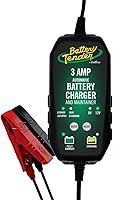
Choose the Battery Tender 3A for routine lead-acid storage care. It switches to float mode after charging and resumes full output when its charging system detects that more charge is needed.
Its combined cable reach is 11 ft, which helps when planning a garage setup. Measure the actual route around the car, allowing slack without leaving cords across a walkway.
Skip it if fast recovery of a large, depleted battery is your main need. For lithium use, confirm the exact model's supported chemistry and charging mode in its manual before connecting.
For connection steps, see how to hook up a battery tender. Our guide to battery maintainers versus battery chargers helps if restoring charge is your main task.
How should you connect a maintainer to a stored car?
Use the vehicle's approved charging points and the charger's connection sequence. Some cars require a designated ground point so their battery monitoring system can account for charging.
Place the unit on a stable surface as directed, with ventilation around it. Keep it away from water, sparks, flames, and hot or moving vehicle parts.
Route cables before closing the hood or trunk, checking that hinges and latches cannot pinch them. Keep connectors off damp floors and avoid stretching a cable tight between the car and outlet.
For a permanent lead, secure and insulate it according to the instructions. Read how to use a battery tender for help with setup and indicator checks.
Confirm that the charger shows the expected mode and charging status before leaving it. A connected plug alone doesn't tell you that the battery is receiving charge.
Can you leave a battery maintainer on all winter?
Extended connection is suitable only when the charger, battery, and vehicle instructions allow it. Automatic maintenance still needs periodic inspection.
NOCO says the Genius5 can remain connected for ongoing maintenance. For any model, check the manual's placement, temperature, and unattended-use instructions before relying on it through the season.
During visits, look for fault lights, damaged cables, loose connections, moisture, and changes in the battery's condition. After a power outage, confirm that the unit has resumed the correct operation.
Read can you leave a battery tender on all the time? before settling on a long-term setup.
What if you can't keep a maintainer connected?
Arrange battery checks and recharging instead of relying on occasional brief starts. The right interval depends on battery condition, vehicle drain, and storage conditions, so use the vehicle's guidance.
If removal is allowed, store the battery upright in a dry, ventilated location within its storage temperature limits. Protect its terminals from tools and other metal objects.
Short idling sessions may fail to replace the energy used for starting and can leave moisture in the engine and exhaust. If the car needs exercise during storage, follow the manual's driving guidance and run it outdoors.
A battery that repeatedly loses charge after a full recharge needs further attention. More charger output won't solve an electrical drain or a failing battery.
What should you check before driving after storage?
Inspect the car before starting it, then check its behavior before normal driving. Remove the cover, disconnect charging equipment as instructed, and clear any storage materials.
Check tire pressure, fluid levels, lights, and battery connections. Look underneath for leaks and around the engine, intake, and exhaust for nests or obstructions.
Check the brakes at low speed in a safe area before joining traffic. Stop and address unusual noises, persistent warning lights, weak starting, or braking problems.
Which winter storage plan should you choose?
For how to winterize a car for storage, make the battery plan fit the parking space and the car. Choose equipment only after confirming the battery type and approved connection points.
Pick the NOCO Genius5 for mixed compatible battery needs, the CTEK NXT 5 for a recurring 12 V seasonal setup, or the Battery Tender 3A for routine lead-acid maintenance.
Without reliable power, schedule checks and recharging before you park. If you're still deciding whether charging equipment belongs in your storage plan, read what a battery maintainer is.
Sources
Frequently asked questions
Should I disconnect my car battery for winter storage?
Disconnect the battery only if your vehicle manual allows it and explains the procedure. Removing the connection can reduce electrical drain, but it may disable alarms or erase settings; the battery still loses charge while disconnected, so arrange checks and recharging rather than leaving it untouched all winter.
Can I leave a battery maintainer connected all winter?
Yes, if the maintainer supports extended connection and matches your battery and vehicle requirements. Use the correct charging mode, protect the unit and connections from moisture, and check the setup periodically; an automatic maintenance function doesn't remove the need to inspect cables, battery condition, and fault indicators.
How often should I start a stored car?
Use your vehicle manual's storage guidance rather than starting the engine on a fixed schedule. Brief idling may not replace the charge used to start the car or bring everything fully up to temperature; if the manual calls for running it, do so outdoors and follow its driving instructions.
What should I do before driving a car after winter storage?
Check tire pressure, fluid levels, lights, battery connections, and the ground beneath the car for leaks. Remove covers and charging equipment, then inspect for animal nests or chewed wiring; follow the vehicle's restart procedure, and address warning lights, unusual noises, or braking problems before returning to normal driving.