What Is a Battery Maintainer?
A battery maintainer is a device that monitors a battery and adds charge as needed during storage. It keeps a healthy battery ready between uses; combined charger-maintainers can also recharge a low battery.
On this page (9 sections)
- What is a battery maintainer used for?
- How does a battery maintainer work?
- Is a battery maintainer different from a battery charger?
- Is a maintainer the same as a trickle charger?
- Can you leave a battery maintainer connected?
- How do you choose a battery maintainer?
- How do you set up and care for a battery maintainer?
- Which battery maintainer mistakes should you avoid?
- What is a battery maintainer worth choosing for your vehicle?
A battery maintainer is a device that monitors a battery and adds charge as needed during storage. It helps keep a healthy battery ready when a car, motorcycle, boat, or lawn mower sits unused.
Understanding what a battery maintainer does makes choosing one easier: you're buying ongoing battery care, with recharging ability if the model includes it. It won't replace a failed battery or fix a vehicle that drains power because of an electrical fault.
What is a battery maintainer used for?
A battery maintainer is used to offset charge loss while a vehicle is parked. Batteries gradually lose charge on their own, and alarms, clocks, and other electronics can add a small ongoing load.
It makes sense for a weekend car, a motorcycle stored over winter, or equipment between seasons. A vehicle driven often enough to keep its battery charged may have little need for one.
Repeated short trips can leave a battery low, but frequent discharge deserves attention beyond plugging in a maintainer. Check the battery and vehicle charging system if the problem returns during normal use.
For vehicle-specific options, see battery maintainers and chargers for cars, trucks, and boats.
How does a battery maintainer work?
A smart maintainer changes its charging output as the battery's needs change. Combined units first replenish charge, then move into a maintenance stage rather than continuing at full output.
Float charging holds a suitable maintenance voltage, while pulse systems add charge in intervals. The exact method matters less than matching the unit to the battery and using the correct mode.
What does a battery maintainer do after charging?
After charging, a maintainer supplies the smaller amount of energy needed to keep the battery ready. It must still have enough capacity to handle normal charge loss and any allowed connected loads.
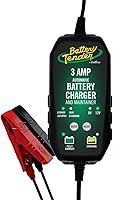
The Battery Tender 3A automatically switches to float mode and resumes full output if voltage drops too far under load. Its two-color indicator helps you check charging status.
Choose it for routine upkeep of compatible 6-volt or 12-volt lead-acid batteries, including AGM and gel. Its ring-terminal and alligator-clip combo cable suits either repeated storage hookups or occasional connections.
Skip it if faster recharging is your main goal; its 3-amp output favors upkeep over speed. For a lithium battery, confirm the exact supported chemistry and mode before choosing this model.
Is a battery maintainer different from a battery charger?
A maintainer focuses on keeping a battery charged, while a charger replenishes missing charge. A combined charger-maintainer handles both jobs, but its output and starting-voltage limits still matter.
If you return to a low battery, charging can take many hours before maintenance begins. A maintainer also isn't a jump starter and won't provide an instant engine-starting boost.
Read battery maintainer vs. battery charger for the distinction. For a deeply discharged battery, start with whether a Battery Tender can charge a dead battery.
The NOCO Genius5 combines charging and maintenance with a 5-amp output. It supports 6-volt and 12-volt lead-acid batteries and LiFePO4 batteries through the appropriate supported modes.
Choose it if you want one unit for storage and occasional recharging across several compatible battery types. Its ambient-temperature sensor adjusts charging as surrounding conditions change.
Skip it if you regularly need to replenish large batteries quickly. More output may suit that job, provided the battery permits the charging current.
Is a maintainer the same as a trickle charger?
A smart maintainer adjusts charging, while a traditional trickle charger supplies a low current continuously. Continuous charging can overcharge a battery if the charger lacks suitable control.
Product names overlap, so look for automatic maintenance behavior rather than relying on the words on the box. Our battery tender vs. trickle charger guide explains the difference.
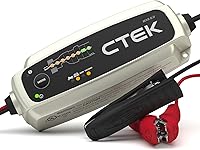
The CTEK MXS 5.0 uses an automatic 8-step process and float/pulse maintenance. CTEK describes it as suitable for connection over months at a time.
Choose this 4.3-amp model for a stored car or motorcycle with a compatible lead-acid battery. Its focus fits buyers who want ongoing care without needing several voltage and chemistry options.
Skip it for a 6-volt battery or LiFePO4 battery. Reconditioning is a separate function, so use it only where both the charger and battery instructions allow it.
Can you leave a battery maintainer connected?
You can leave a suitable maintainer connected when its instructions allow extended use with your battery. Long-term connection still calls for periodic checks of the battery, cables, indicators, and power supply.
NOCO describes its Genius models as suitable for indefinite maintenance connection. That doesn't remove the need to investigate a fault light, damaged cord, loose terminal, or battery that becomes unusually hot.
The NOCO Genius10 combines maintenance with more charging output for batteries that can accept it.
Choose its 10-amp output when recharging larger compatible batteries is a regular task alongside storage upkeep. It supports 6-volt and 12-volt lead-acid and LiFePO4 batteries, with temperature-adjusted charging.
Skip it if you only maintain a small battery or its allowed charge current is lower. Extra output doesn't improve storage care once a battery is full.
See whether you can leave a battery tender on all the time before planning a long storage setup.
How do you choose a battery maintainer?
Choose by battery voltage, chemistry, and allowed charging current, then consider storage conditions and cable access. Vehicle size alone isn't enough to identify the right unit.
- Read the battery label. Match its voltage and chemistry to a supported charger mode; AGM, gel, and LiFePO4 aren't interchangeable settings.
- Check capacity guidance. The battery's amp-hour capacity and recommended charge current help determine a suitable charger size.
- Separate upkeep from recharging. A lower-output unit may handle maintenance well but take longer to replenish a low battery.
- Plan the connection. Clamps suit occasional use; correctly installed eyelets make repeated hookups easier.
- Check the storage location. Confirm permitted temperatures, moisture exposure, outlet access, and enough cable reach without strain.
A higher amp number isn't automatically better for a motorcycle battery. Follow the battery maker's current limit and allow extra charging time when using a lower-output unit.
For more selection help, read how to choose the right battery tender or maintainer and what size battery charger you need.
How do you set up and care for a battery maintainer?
Set up the maintainer with AC power disconnected, using the connection points and sequence specified for your vehicle. Some vehicles require designated charging posts or a chassis connection so their battery monitoring system works correctly.
- Inspect the battery for damage, swelling, leakage, or signs of freezing before connecting anything.
- Confirm the battery type, voltage, and correct charging mode.
- Make the battery connections in the instructed order, keeping clamps clear of moving parts.
- Route cables away from belts, fans, exhaust parts, sharp edges, and places where a hood could crush them.
- Connect AC power as instructed, then check that the indicator shows normal operation.
Keep the charger secure in a ventilated location and follow its placement instructions. Before removing battery connections, disconnect AC power and use the specified removal sequence.
During storage, check for fault indicators, corrosion, loose connections, and cable damage. If the unit repeatedly returns to heavy charging, investigate battery condition or an ongoing vehicle load.
Use how to hook up a battery tender for connection guidance. For seasonal preparation, read how to winterize a car for storage.
Which battery maintainer mistakes should you avoid?
Avoid the wrong mode, recovery shortcuts, and ignoring repeated discharge. Automatic controls help manage charging, but they can't correct an unsuitable setup.
- Don't select lithium mode for a lead-acid battery. Match the exact chemistry, not just the voltage.
- Don't use recovery mode as routine maintenance. The NOCO models can start normally from 1 volt and offer Force Mode down to zero, but manual intervention requires following their instructions closely.
- Don't charge a frozen or damaged battery. A recovery feature cannot make it safe.
- Don't expect desulfation to repair every failure. An aged battery may no longer hold useful charge.
- Don't assume one connection maintains every battery in a boat or RV. Confirm how the battery bank is wired and which batteries the charger can serve.
What is a battery maintainer worth choosing for your vehicle?
Choose a battery maintainer for storage upkeep, then pay for additional charging ability only if you'll use it. Start with compatibility and battery condition before comparing features.
Pick Battery Tender 3A for routine lead-acid upkeep, CTEK MXS 5.0 for dedicated 12-volt lead-acid care, or NOCO Genius5 for broader supported battery types. Choose Genius10 when regular recharging justifies its higher output and your battery accepts it.
For a stored car, compare battery maintainers and chargers for cars. To weigh more options against your setup, use our best battery maintainer guide.
Frequently asked questions
What does a battery maintainer do?
A battery maintainer monitors a battery and adds charge as needed to keep it ready during storage. It offsets normal charge loss and small parked-vehicle electrical loads within its capacity, but it cannot repair a failed battery or solve a vehicle fault that keeps draining it.
Can a battery maintainer charge a dead battery?
Some combined charger-maintainers can recharge a deeply discharged battery, but recovery depends on the device's minimum starting voltage, supported modes, and battery condition. A maintenance-only unit may not do the job, and no recovery feature makes a damaged battery safe to charge or guarantees that it will hold charge.
Is a battery maintainer the same as a trickle charger?
A smart maintainer adjusts charging as the battery's needs change, while a traditional trickle charger supplies a small current continuously. Names often overlap, so choose by charging behavior: look for automatic maintenance, support for your exact battery type, and instructions that allow connection for your planned storage period.
Can I leave a battery maintainer connected?
You can leave a maintainer connected for extended storage when its instructions permit that use with your battery. Check the setup periodically for faults, loose connections, damaged cables, and unusual battery heat or leakage, and keep the charger within its stated operating conditions throughout the storage period.