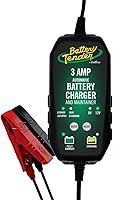
What Is a Trickle Charger?
What is a trickle charger? It's a low-current battery charger that adds charge slowly; basic models need monitoring, while smart models may also maintain a full battery.
On this page (8 sections)
- What is a trickle charger, and how does it work?
- Is a trickle charger different from a battery maintainer?
- When should you use a trickle charger?
- How do you choose the right trickle charger?
- How do you set up a trickle charger safely?
- Can you leave a trickle charger on all the time?
- Will a trickle charger recharge a dead battery?
- What is a trickle charger worth buying for your vehicle?
A trickle charger is a low-current battery charger that adds charge slowly. If you're asking what is a trickle charger good for, it suits gradual recharging when you have time, but long-term storage calls for automatic maintenance.
The key buying question is what happens when the battery becomes full. A basic charger may keep supplying current, while a smart charger can reduce or pause charging and monitor the battery.
What is a trickle charger, and how does it work?
A trickle charger feeds a small charging current into a compatible battery. That current can replace charge lost through self-discharge and electrical loads while a vehicle sits.
Slow charging gives you time to recharge between uses, but it won't provide an instant engine start. A plug-in charger also needs a suitable power outlet, so plan where the vehicle will stay before buying.
The term “trickle charger” covers both basic chargers and smart models with maintenance functions. Read the operating instructions to learn whether charging stops automatically and whether the unit can remain connected.
Is a trickle charger different from a battery maintainer?
A basic trickle charger adds charge continuously, while a maintainer controls charging to keep a battery ready during storage. Many smart chargers combine these jobs in one unit.
Continuous low current can still overcharge a full battery. For a vehicle parked for weeks or months, automatic maintenance matters more than a low amp number.
See what a battery maintainer is for the storage role, or battery maintainer vs battery charger if you also need to recharge a depleted battery.
What is a smart trickle charger useful for?
A smart trickle charger suits someone who needs recharging and storage maintenance from the same device. The NOCO Genius5 is a practical choice for one compatible battery when you want both functions.
Its thermal sensor adjusts charging for ambient temperature, which helps when garage conditions change through the year. NOCO says its monitoring supports continuous maintenance connection when used as directed.
Choose it for a car or seasonal vehicle that sometimes needs recharging before storage. Skip it if you need two batteries connected at once, or if your small battery's allowed charging current doesn't suit this model.
When should you use a trickle charger?
Use a trickle charger for gradual recharging between uses, provided you can follow its charging schedule. Choose an automatic maintainer for a vehicle that will stay parked through a season.
Occasional short drives may not replace all the charge used to start a vehicle. Charging between trips can help, but repeated discharge also calls for checking battery condition and unwanted electrical drain.
A charger cannot repair a loose connection or remove an excessive drain. For longer parking periods, how to winterize a car for storage covers battery care alongside the rest of the preparation.
Which charger suits a motorcycle or powersports battery?
Choose a model that matches the small battery's charging limits, rather than assuming any car charger will work. Check the battery label and manual for voltage, chemistry, capacity, and maximum charging current.
The CTEK CT5 supports lead-acid batteries, including AGM, and LiFePO4 batteries. Its included clamps and eyelets give you a choice between temporary connections and an installed battery lead.
Consider it for a motorcycle, ATV, JetSki, or snowmobile that sits between outings. Skip it for a 6 V battery or when your main need is a quicker recharge of a large vehicle battery.
Its reconditioning mode is a separate function, not the default storage setting. Use it only for the battery types and conditions permitted in CTEK's instructions.
How do you choose the right trickle charger?
Match voltage, chemistry, and charging current before comparing extra features. Then check capacity limits, the number of batteries you need to connect, and the distance to your outlet.
- Read the battery label. AGM, flooded lead-acid, gel, and LiFePO4 need an appropriate charging profile.
- Separate charging from maintenance. A charger may maintain a larger battery than it can recharge within a useful time.
- Check charging current. More amps help only when the battery permits that current.
- Plan the connection. Clamps suit occasional use; eyelet leads can simplify repeat connections when installed correctly.
For a fuller checklist, read how to choose the right battery tender or maintainer. Use what size battery charger you need when recharge time matters as much as storage.
What if you need to maintain two batteries?
Choose a two-bank charger when you regularly keep two separate batteries connected. It avoids moving one charger between vehicles and forgetting the second battery.
The NOCO Genius2X2 suits a garage with two seasonal vehicles or pieces of equipment. Its included DC extension cables can help reach batteries parked apart.
Choose it for maintaining two batteries and gradually recharging batteries within its supported range. Skip it if you only have one battery, or if your main need is faster recovery of a large discharged battery.
Treat each bank as a separate connection and follow NOCO's wiring instructions. Don't improvise connections across a combined battery system.
When is a higher-current charger worth choosing?
Choose higher current when a compatible battery needs recharging within a shorter window. It offers little benefit if your only task is replacing small storage losses.
The NOCO Genius10 suits one larger battery that needs both recharging and later maintenance. It supports lead-acid and LiFePO4 batteries and includes temperature compensation.
Choose it when the battery permits its output and you need more charging capacity than a small maintainer offers. Skip it for storage-only care of a small battery or when you need two charging banks.
How do you set up a trickle charger safely?
Start with the charger unplugged, then follow the vehicle and charger connection instructions. Use the vehicle's designated charging points when required, especially on vehicles with battery monitoring systems.
- Park securely, switch off the ignition and accessories, and inspect the battery.
- Confirm the battery type and select the correct voltage and charging mode.
- Attach the leads in the specified order, using the required positive terminal and negative or ground point.
- Route cables away from belts, fans, exhaust parts, sharp edges, and closing panels.
- Connect AC power and check the charger indicators for normal operation.
Keep the charger ventilated and protect it from moisture as its instructions require. Don't assume a unit suitable for a boat battery can sit exposed to rain.
When disconnecting, remove AC power first and follow the required lead-removal order. Read how to hook up a battery tender for connection details, or how to charge a car battery for the broader charging process.
Can you leave a trickle charger on all the time?
Leave it connected only if continuous maintenance is permitted for your battery and selected mode. A basic charger that keeps supplying current needs supervision and timely disconnection.
NOCO describes the Genius models here as suitable for ongoing maintenance. Follow each model's instructions and inspect the setup periodically rather than treating automatic operation as a reason to ignore it.
Check for loose leads, damaged insulation, moisture, and unusual heat. If a charger repeatedly signals a fault, identify the cause before restarting it.
Read whether you can leave a battery tender on all the time before setting up seasonal storage.
Will a trickle charger recharge a dead battery?
It may recharge a discharged battery, but battery condition and starting voltage determine whether charging can begin. Low current also means a deeply depleted battery can take a long time to recharge.
NOCO says all three Genius models here can begin charging from 1 V and offer manual Force Mode down to 0 V. Use that mode only under the manual's instructions after confirming the battery is suitable.
Avoid these common mistakes:
- Trying to charge damage away. Never charge a frozen, leaking, swollen, or otherwise damaged battery.
- Using recovery mode routinely. Special modes need a specific reason and compatible chemistry.
- Expecting a fixed charging time. Capacity, discharge level, temperature, and charging behavior affect the wait.
- Ignoring repeat discharge. A battery that won't hold charge needs further checks.
What is a trickle charger worth buying for your vehicle?
Choose by battery limits and the job ahead: gradual charging, seasonal maintenance, or both. For one compatible battery, pick the Genius5 when you need a balance of recharging and storage care.
Consider the CT5 for a compatible powersports battery, the Genius2X2 for two separate batteries, or the Genius10 for a larger battery that permits higher current. If you're still deciding what is a trickle charger versus a maintainer, prioritize automatic maintenance for long storage.
Browse battery maintainers and chargers for cars, trucks, and boats for more options. Our battery tender vs trickle charger guide can help settle which charging approach fits your parking routine.
Frequently asked questions
Is a trickle charger the same as a battery maintainer?
No, a basic trickle charger supplies a small, steady current, while a battery maintainer monitors the battery and adjusts charging as needed. Some smart chargers combine both roles, so check the instructions for maintenance mode and continuous connection before choosing one for long storage.
Can you leave a trickle charger connected all the time?
Only when its instructions permit continuous maintenance for your battery type; a basic charger can overcharge a full battery if it keeps supplying current. Use the correct mode, keep the charger ventilated, inspect connections periodically, and disconnect it if you notice unusual heat, swelling, or leakage.
Will a trickle charger charge a dead car battery?
It can recharge some discharged batteries, but low voltage may prevent an automatic charger from starting; recovery depends on battery condition and the charger's supported modes. Follow the recovery instructions, never charge a frozen or damaged battery, and have a battery checked if it cannot hold a charge.
What amp trickle charger should I use for a car?
Use a charging current allowed by your battery manufacturer after matching voltage and chemistry; low current can replace small storage losses, while more current can shorten a recharge on a compatible battery. Check battery capacity and the charger's charging range rather than choosing amperage from vehicle size alone.