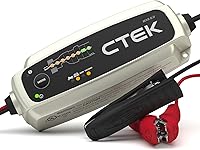
CTEK MXS 5.0 Review: Worth It? (October 2026)
The CTEK MXS 5.0 suits seasonal cars and bikes with compatible 12-volt lead-acid or AGM batteries. Choose it for automatic charging and storage maintenance; consider the NXT 5 for LiFePO4 batteries or the Genius10 for higher output and 6-volt support.
On this page (11 sections)
- Who is the CTEK MXS 5.0 for?
- Which batteries and power supplies fit?
- Is the MXS 5.0's charging output enough?
- How does charging turn into maintenance?
- Which alternative should you choose?
- How should you set up the MXS 5.0?
- Can you leave it connected during storage?
- When should you use reconditioning?
- Which accessories and care habits help?
- What mistakes should you avoid?
- Should you buy the CTEK MXS 5.0?
The CTEK MXS 5.0 is a good fit for seasonal cars and bikes with compatible lead-acid or AGM batteries. Choose it when keeping a battery ready between outings matters more than charging a large, depleted battery quickly.
Its main appeal is the move from automatic charging to storage maintenance. Before buying, check your battery's chemistry, voltage and allowed charging current, then decide whether you need broader compatibility or more output.
Who is the CTEK MXS 5.0 for?
The MXS 5.0 suits owners who charge between drives or store a vehicle for weeks or months. It makes sense for a weekend car, a seasonal motorcycle or another compatible battery with access to AC power.
CTEK MXS 5.0: Best for seasonal vehicles

- 4.3 A output
- 12 V lead-acid and AGM support
- Automatic 8-step charging
- Float/pulse maintenance
A focused choice for keeping a compatible car or bike battery charged between outings. Automatic charging and float/pulse maintenance suit seasonal storage.
Pros
- Automatic charging for compatible lead-acid and AGM batteries
- Float/pulse maintenance for extended storage
- Reconditioning function
- Reverse-polarity and short-circuit protection
Cons
- Not a choice for LiFePO4 or 6 V batteries
- Lower charging output than the NOCO Genius10
A typical buyer has enough time to let charging finish and wants the charger to maintain the battery afterward. That is a different job from getting a vehicle ready to leave in a few minutes.
Skip this model if your equipment needs a different battery voltage or chemistry. Also look elsewhere if you regularly need to replenish a large battery within a short window.
Why the CTEK MXS 5.0 earns a 9
Its automatic charging and storage maintenance closely match the needs of someone shopping for this model. HopefulHanger's score reflects that fit, along with compatibility and protective features.
The alternatives below solve different problems. A broader battery range helps a mixed garage, while more charging current matters when you need to replace a larger amount of lost charge.
Which batteries and power supplies fit?
The MXS 5.0 supports 12-volt lead-acid and AGM batteries and uses a 120-volt AC input. Match both sides of that connection before buying, especially if you plan to use it outside a standard US power setup.
| Check | What to confirm |
|---|---|
| Battery label | Voltage and chemistry match the charger |
| Battery instructions | Allowed charging current and charging conditions |
| Vehicle manual | Approved connection points and charging procedure |
| Power supply | Suitable AC outlet and safe cable routing |
| Storage location | Ventilation and protection required by the manuals |
AGM is a type of lead-acid battery, but it can require a different charging setting from a flooded battery. Use the battery label and instructions to choose the mode rather than guessing from its size or appearance.
A replacement battery may differ from the one originally fitted to your vehicle. Check the battery you have now, even if you've charged the same car before.
For a lithium-equipped vehicle, the CTEK NXT 5 discussed in our CTEK comparison offers LiFePO4 support. Don't assume that all batteries described as lithium use the same charging requirements.
Is the MXS 5.0's charging output enough?
Its 4.3 amp output suits charging with time to spare, provided your battery allows that current. A larger, deeply discharged battery will require a longer charging window than a smaller battery needing a top-up.
As a rough planning example, replacing 20 amp-hours at that current takes nearly 5 hours before allowing for losses and the slower finishing stage. This is a planning estimate, not a promised completion time.
Battery capacity, starting charge, temperature and condition all affect the result. A charger may reduce current near full charge, so dividing capacity by output won't give an exact finish time.
For a car parked overnight or a bike stored between weekends, charging speed may be a minor concern. For a large battery used again the same day, it deserves more weight.
Use our guide to what size battery charger you need to match output to capacity. Never choose a higher current than the battery manufacturer permits just to save time.
How does charging turn into maintenance?
The MXS 5.0 uses automatic 8-step charging, followed by float/pulse maintenance for a compatible battery. You select the appropriate settings and let the charger manage the charging process.
Charging replaces lost energy; maintenance helps keep a charged battery ready while it sits. If those jobs are unclear, our battery maintainer vs battery charger guide explains the difference.
Read the indicator guide before your first use so you can recognize normal progress, completion and a fault. An illuminated charger isn't enough reason to assume the battery is ready.
Repeatedly unplugging and restarting the charger won't solve a battery that refuses to hold charge. If progress stalls or faults recur, check the connections and follow the troubleshooting instructions before trying another cycle.
Which alternative should you choose?
Choose the NXT 5 for broader chemistry support or the Genius10 for higher output and wider voltage support. Neither advantage is necessary if the MXS already matches your battery and charging schedule.
| Charger | Output | Battery support | Buyer fit |
|---|---|---|---|
| CTEK MXS 5.0 | 4.3 A | 12 V lead-acid and AGM | Seasonal charging and maintenance |
| CTEK NXT 5 | 4.3 A | 12 V lead-acid and LiFePO4 | Different battery chemistries |
| NOCO Genius10 | 10 A | 6 V and 12 V lead-acid and LiFePO4 | Larger batteries and mixed voltage needs |
CTEK NXT 5 for a mixed garage
The NXT 5 suits someone with both conventional vehicle batteries and compatible LiFePO4 batteries. It covers lead-acid types including WET, MF, Ca/Ca, AGM, EFB and GEL, with a stated capacity range of about 1.2–160 Ah.
Automatic temperature compensation adjusts charging voltage as conditions change. Its included Connect U-terminal also suits a battery you want to access through a permanent connection.
Skip the NXT 5 if your only reason to change models is charging speed. It offers no output increase over the MXS, and it doesn't solve a need for lower-voltage equipment.
NOCO Genius10 for larger charging jobs
The Genius10 suits larger compatible batteries that can accept more current, with support for capacities up to 230 Ah. It includes a thermal sensor, battery clamps with integrated eyelet terminals and a mounting bracket.
NOCO also provides manual Force Mode for batteries down to zero volts. That feature requires care: low voltage doesn't tell you whether a battery is safe or worth recovering.
Skip it if you only need storage maintenance and your battery doesn't benefit from the extra current. More output won't correct a damaged battery or a vehicle fault.
Read NOCO Genius vs CTEK for the wider brand comparison. The Genius5 vs Genius10 comparison helps if you're deciding how much NOCO output you need.
How should you set up the MXS 5.0?
Start with the charger unplugged and the battery identified, then follow the vehicle's approved connection procedure. The MXS uses alligator clamps, but the correct connection points depend on the vehicle.
- Inspect the battery. Don't charge one that is frozen, swollen, leaking or visibly damaged.
- Prepare the space. Keep flames and sparks away, provide ventilation and place the charger as directed.
- Find the connection points. Use the vehicle manual, especially where remote charging terminals are fitted.
- Connect and select the mode. Follow the prescribed clamp sequence, polarity checks and AC connection order.
- Check progress. Confirm that the indicators show the expected charging state and no fault.
- Disconnect as instructed. Follow the shutdown sequence before removing clamps or moving the vehicle.
Keep cables clear of fans, belts, hot parts and sharp edges. Don't close a hood or door over a cable unless the route leaves it free from pressure.
Our guide on how to hook up a battery tender explains common connection arrangements. For the wider process, see how to charge a car battery.
Can you leave it connected during storage?
Yes, CTEK says its float/pulse maintenance allows connection for months without harming a compatible battery. Set up the battery, charger and power supply correctly, then inspect them periodically during storage.
CTEK describes the unit as splash-, dust-, spark- and shockproof, with short-circuit and reverse-polarity protection. Those protections don't make a damaged cable, poor connection or unsuitable charging location acceptable.
Route the cable so nobody can trip over it or pull the clamps loose. Before moving the vehicle, make disconnecting the charger part of your departure routine.
Check for loose connections, cable damage, unusual heat or odor during storage visits. Follow the shutdown instructions if anything looks wrong.
CTEK says routine use doesn't require disconnecting the battery, but follow the vehicle manual for its charging arrangement. Special modes can have separate requirements.
Our guide to leaving a battery tender connected covers ongoing checks. For tires, parking and other seasonal tasks, use how to winterize a car for storage.
When should you use reconditioning?
Use reconditioning only when the charger and battery instructions allow it. CTEK says the function can help some underperforming batteries and improve battery life, but recovery depends on the battery's condition.
Don't make it the default setting for every charge. Check which battery types it suits and whether the vehicle must be disconnected before using that mode.
A battery that repeatedly goes flat needs a cause check. Possible causes include battery wear, an electrical drain or a vehicle charging fault, and reconditioning won't resolve all of them.
If a battery completes charging but soon struggles to start the vehicle again, have the battery and charging system checked. Repeated recovery attempts can delay finding the actual problem.
Which accessories and care habits help?
Choose an accessory to solve an access or protection problem, rather than adding parts before you know your setup. CTEK makes a protective bumper, cigarette-plug connector and indicator eyelet for this charger.
The bumper protects the charger and vehicle from contact, while the indicator eyelet is intended for permanent battery installation. Check compatibility and installation requirements before fitting either.
Charging through a vehicle outlet needs extra care. Confirm that the vehicle and connector instructions allow charging through that outlet; an outlet that powers a phone isn't automatically suitable.
After use, unplug and disconnect as directed, inspect the leads and store them without tight bends. Keep clamp contact surfaces clean and follow the manual's cleaning instructions.
What mistakes should you avoid?
Avoid choosing by vehicle name, forcing a recovery mode or treating maintenance as a repair. These mistakes can lead to the wrong charger or hide a problem that needs attention.
- Assuming every motorcycle battery is alike: read its voltage and chemistry before connecting.
- Expecting a quick start from a charger: allow charging time rather than treating it as a jump starter.
- Selecting AGM by guesswork: use the setting required by the battery.
- Ignoring repeated faults: check connections and follow the fault guide before restarting.
- Buying for several batteries at once: this is a single-port charger, so plan for one battery at a time.
- Leaving a storage setup unchecked: inspect it periodically even when charging is automatic.
If several vehicles need maintenance at the same time, decide how you'll cover them before ordering. Moving one charger between batteries requires a schedule and safe reconnection each time.
Should you buy the CTEK MXS 5.0?
Buy the CTEK MXS 5.0 for a compatible seasonal vehicle when you have time for routine charging and want maintenance between outings. It is a focused choice for that job.
Choose the NXT 5 if your battery collection includes LiFePO4. Choose the Genius10 if you need its wider voltage support or have a larger battery that permits higher charging current.
Before ordering, write down your battery's voltage, chemistry, capacity and allowed charging current. Match those details to the charger, then check the charger sizing guide if your charging window is tight.
For more options centered on keeping an idle battery ready, use our best battery maintainer guide.
Frequently asked questions
What batteries can the CTEK MXS 5.0 charge?
The CTEK MXS 5.0 charges compatible 12-volt lead-acid and AGM batteries; read the battery label before choosing a mode, since vehicle type alone doesn't identify battery chemistry. For LiFePO4 or 6-volt batteries, choose another charger with explicit support and follow the battery manufacturer's charging limits.
Can you leave the CTEK MXS 5.0 connected?
Yes, CTEK says its float/pulse charging supports connection for months at a time without harming a compatible battery. Set it up according to the charger, battery and vehicle manuals, then inspect the battery, cables and power connection periodically rather than leaving the setup unchecked throughout storage.
Does the CTEK MXS 5.0 have a reconditioning mode?
Yes, the MXS 5.0 includes a reconditioning function that CTEK says may help some underperforming batteries. Use it only where the charger and battery instructions allow, including any requirements for disconnecting vehicle electronics; physical damage, worn cells and recurring vehicle faults need attention beyond a charging mode.
Is the CTEK MXS 5.0 a fast charger?
The MXS 5.0 is better suited to routine charging and maintenance than short charging windows. Its 4.3 amp output makes battery capacity and discharge level important to your schedule; a higher-output charger can shorten charging when the battery accepts that current, but the final stage still takes time.