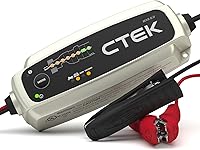
NOCO Genius vs CTEK: Which Is Better? (October 2026)
In this CTEK vs NOCO comparison, choose NOCO Genius10 for mixed batteries and more charging output, CTEK MXS 5.0 for lead-acid storage care, or CTEK NXT 5 for a 12V setup that includes LiFePO4. Match the battery's voltage, chemistry and allowed charging current before choosing.
On this page (8 sections)
- CTEK vs NOCO: which charger fits your battery?
- Does the NOCO Genius10 charge faster than CTEK?
- Who should buy each charger?
- Which is better for a deeply discharged battery?
- How should you connect and set up either brand?
- Which is easier for long-term battery maintenance?
- What mistakes make either charger a poor fit?
- Which CTEK vs NOCO charger should you choose?
Choose NOCO Genius10 for mixed batteries and larger recharge jobs, CTEK MXS 5.0 for lead-acid storage care, or CTEK NXT 5 for a 12V setup that includes LiFePO4. The right CTEK vs NOCO choice starts with your battery, then the time you can allow for charging.
A charger used all winter on one parked car has a different job from one moved between a truck, motorcycle and mower. Buy for the batteries you actually maintain, rather than a recovery feature you may never need.


CTEK vs NOCO: which charger fits your battery?
Match voltage and chemistry before comparing output. A charger can offer useful features and still be wrong for the battery in front of you.
Genius10 supports 6V and 12V lead-acid batteries, including flooded, maintenance-free, AGM, Gel, SLA and VRLA types. It also supports LiFePO4, making it the broadest voltage choice among these models.
MXS 5.0 is a 12V lead-acid charger, including AGM support. NXT 5 is also for 12V batteries, with support for WET, MF, Ca/Ca, AGM, EFB, GEL and LiFePO4.
Read the label on the battery itself, especially if a previous owner replaced it. The vehicle model, battery case color or word “sealed” won't tell you everything needed to choose a charging mode.
LiFePO4 support doesn't mean support for every lithium chemistry. Also, a vehicle with a lithium traction battery can have a separate lead-acid starter or accessory battery, so identify the battery you're charging.
Our guide to battery maintainers and chargers for cars, trucks and boats explains how the charging job changes across vehicles and storage routines.
Which CTEK or NOCO charger should you skip?
Skip both CTEK models for a 6V battery, and skip MXS 5.0 if you need LiFePO4 support. Those compatibility limits settle the decision before convenience features come into play.
Skip Genius10 if your only battery needs a lower charge current than its intended charging mode allows. A higher-output charger isn't automatically a better match for a small motorcycle or lawn equipment battery.
None of these is a universal answer for a battery bank with a different system voltage. Check the bank's wiring and equipment instructions rather than connecting across whatever terminals are easiest to reach.
Does the NOCO Genius10 charge faster than CTEK?
Genius10 offers more charging output, which can shorten bulk charging on a compatible battery. It provides 10A, compared with 4.3A from either CTEK model here.
That difference matters most when replacing a substantial amount of charge before the next use. It matters less when a parked vehicle only needs maintenance between occasional drives.
The battery's allowed current comes first. Check its recommended charging range and the charger's mode instructions, especially for smaller batteries and LiFePO4 packs with a battery management system.
For a rough planning example, replacing 20Ah at a steady 4A would take 5 hours before allowing for losses and the slower finishing stage. Actual current changes during charging, so simple division gives a starting estimate rather than a finish time.
Don't compare chargers using a single advertised number of hours. Battery capacity, starting charge, temperature and condition all affect how long the job takes.
Use our guide to what size battery charger you need to match current to capacity. For planning an overnight recharge, see how long it takes to charge a car battery.
When does extra output stop being useful?
Extra output adds little to an already charged battery in storage. Once charging reaches the maintenance stage, the task is keeping the battery ready rather than pushing current into it.
If you can leave a compatible battery connected between weekend drives, prioritize the connection routine and maintenance mode. If you regularly need to recharge before work, available charging time becomes a stronger reason to choose Genius10.
A charger also isn't a jump starter. If you need to leave immediately, don't assume a higher charging current will make a flat battery ready within minutes.
Who should buy each charger?
Choose Genius10 for variety, MXS 5.0 for focused storage care, and NXT 5 for a CTEK setup that includes lithium. These are different buyer needs, rather than a single brand winning every job.
NOCO Genius10: for a garage with several charging jobs
Genius10 makes sense if you move one charger among compatible vehicle batteries and sometimes need a substantial recharge. Its wider voltage support reduces the chance that an older vehicle needs a separate charger.
It includes clamps with integrated eyelet terminals, plus a mounting bracket. Clamps suit temporary connections, while a correctly installed permanent lead can make repeat maintenance less awkward.
Skip it if your use is limited to a small battery whose charge limits don't suit it. Also, don't pay attention to recovery options at the expense of checking ordinary charging compatibility.
Our NOCO Genius10 review takes a closer look at its charging and maintenance features.
CTEK MXS 5.0: for a car parked between drives
MXS 5.0 fits someone maintaining a compatible car or bike battery through long gaps between uses. Its automatic 8-step process and float/pulse maintenance give it a clear role in seasonal care.
CTEK describes connected maintenance for months at a time. That suits a stored vehicle with access to suitable mains power, provided its battery and installation instructions allow the arrangement.
Skip it if you expect to switch to LiFePO4 or need frequent large recharge jobs within a short window. Its focused compatibility is useful only when it matches the battery you plan to keep.
Read our CTEK MXS 5.0 review for more detail on that choice.
CTEK NXT 5: for a changing 12V battery setup
NXT 5 fits buyers who want CTEK automatic charging while keeping the option to use LiFePO4. It also includes a Connect U-terminal for permanent battery mounting.
That connection can help when reaching the battery requires removing a seat or opening a tight compartment. Secure the lead according to the instructions so it can't rub against moving parts or hot surfaces.
Skip it if you need an older vehicle's lower-voltage battery covered or want more output for repeated larger recharges. Lithium support alone doesn't make it the right choice for every garage.
Which is better for a deeply discharged battery?
Genius10 has the clearest low-voltage charging options here, with normal charging from as low as 1V and manual Force Mode down to zero volts. Use manual recovery only after confirming the battery is suitable and following the instructions.
A battery that won't start an engine isn't necessarily at zero volts. Loose connections, a vehicle fault or a battery that can no longer deliver enough starting current can produce similar symptoms.
Both CTEK models include reconditioning functions. CTEK says MXS 5.0 may recover some underperforming batteries, while NXT 5 includes desulfation and Recond modes for lead-acid batteries.
Those features address certain lead-acid problems; they don't repair cracked cases, leaking batteries or failed internal parts. Don't try to charge a frozen, swollen or visibly damaged battery.
Should you use Recond every time?
Use reconditioning only when the battery and charger instructions call for it. Routine charging, maintenance and reconditioning are separate jobs.
Don't select a lead-acid recovery program for LiFePO4, and don't assume every lead-acid battery permits the same treatment. Check whether the vehicle's electronics require special precautions before using a recovery mode with the battery installed.
If a battery repeatedly goes flat after a full charge, investigate the cause. Repeating a recovery cycle won't solve a parasitic drain or a fault in the vehicle's charging system.
How should you connect and set up either brand?
Identify the battery, inspect it, then make the connections with mains power disconnected. Follow the vehicle's designated charging points and the charger's connection sequence.
Start with a stable, ventilated location away from flames and sparks. Check the charger leads for damage, and deal with loose or corroded connections before beginning.
On some vehicles, the correct negative connection is a designated chassis point rather than the battery post. Follow the vehicle manual so charging works with any battery monitoring system.
Route cables clear of belts, fans, exhaust parts and sharp edges. If a hood or storage cover will close, make sure it won't pinch the cable.
Connect as directed, apply mains power and select the correct battery mode. Watch the initial indicators long enough to confirm normal charging rather than leaving immediately after plugging it in.
Our guide to how to hook up a battery tender explains connection planning in more detail. For the full charging sequence, read how to charge a car battery.
What changes when you move the charger?
Check the mode again every time you change batteries. A correct setting for one vehicle can be wrong for the next, even when the connectors fit.
Keep a simple record of each battery's voltage, chemistry and allowed charge current near the storage area. This is especially useful if you alternate between AGM and LiFePO4.
Permanent leads also need a compatibility check. Don't assume connectors from different charger brands or accessory ranges are interchangeable because they look similar.
Which is easier for long-term battery maintenance?
MXS 5.0 is a focused storage choice, while Genius10 and NXT 5 suit broader battery needs. All 3 have automatic charging functions, but correct setup still determines whether connected storage is appropriate.
NOCO describes Genius10 as continuously monitoring the battery for indefinite maintenance. With any model, follow the battery maker's guidance and inspect the setup during the storage period.
Maintenance replaces small losses from self-discharge and vehicle loads. It shouldn't hide a persistent fault that drains the battery unusually fast whenever the charger is removed.
If you're unsure how maintenance differs from recharging, read what a battery maintainer does. Our guide also covers whether you can leave a battery tender on all the time.
How do weather and placement affect the choice?
Temperature compensation helps adjust charging, but placement still matters. Genius10 uses an integrated ambient thermal sensor, and NXT 5 also adjusts charging voltage with temperature.
That doesn't override the battery's temperature limits, particularly for lithium charging. Follow the battery instructions even if the charger can operate in the surrounding conditions.
MXS 5.0 has a splash and dustproof design, and CTEK rates NXT 5 IP65. These features don't make immersion acceptable or remove the need to protect mains plugs and connections.
Place the charger where air can circulate, and don't cover it with a blanket or pile storage items over it. Keep it off the battery itself and away from places where water collects.
What mistakes make either charger a poor fit?
The biggest mistakes are buying for the brand, choosing the wrong mode and expecting charging to cure every fault. Avoid those errors before comparing smaller convenience features.
- Choosing by vehicle name alone: A motorcycle, boat or car can use different battery chemistries, so read the battery label.
- Treating AGM as lithium: AGM is lead-acid and needs the appropriate charging mode.
- Ignoring current limits: A compact battery can require less current than a larger automotive battery.
- Using recovery as routine care: Select it only for an approved battery and situation.
- Stopping too early: An engine starting again doesn't prove the battery has finished charging.
- Ignoring repeated discharge: Check battery condition and vehicle drain instead of relying on the charger to mask them.
A charge-complete indication also doesn't prove a battery can deliver its original starting performance. If the vehicle still struggles after charging, arrange a battery and charging-system check.
Which CTEK vs NOCO charger should you choose?
Pick the charger that covers your next real job without exceeding the battery's limits. In this CTEK vs NOCO comparison, Genius10 suits varied charging work, MXS 5.0 suits seasonal lead-acid care, and NXT 5 suits a CTEK user who needs LiFePO4 compatibility.
Before ordering, write down the battery's voltage, chemistry, capacity and recommended current. Then decide whether you need a recharge before tomorrow or maintenance over the coming months.
If all your batteries fit the same requirements, connection access and available charging time can settle the choice. For another brand option centered on routine upkeep, read our NOCO Genius vs Battery Tender guide.
If NOCO fits your needs but you're unsure about output, compare NOCO Genius5 vs Genius10 before choosing.
Frequently asked questions
Is NOCO or CTEK better?
Choose by battery and task, rather than brand alone. Genius10 suits mixed batteries and larger recharge jobs when its output is allowed.
MXS 5.0 suits lead-acid storage care, while NXT 5 adds LiFePO4 compatibility to a 12V CTEK setup.
Check the battery's charging limits before buying.
Can CTEK MXS 5.0 charge a lithium battery?
No, MXS 5.0 is for 12V lead-acid batteries, including AGM. Choose a charger with explicit support for your lithium chemistry instead.
Genius10 and NXT 5 support LiFePO4, but that doesn't mean they suit every lithium battery.
Confirm the voltage, charge limits and battery maker's instructions.
Which charger is better for a deeply discharged battery?
Genius10 offers normal charging from as low as 1V and manual Force Mode down to zero volts. That makes it the clearest low-voltage option here, but recovery depends on battery condition.
Inspect the battery first, follow the manual and never use recovery features on a damaged or frozen battery.
Can you leave a NOCO or CTEK charger connected?
Yes, when the model's maintenance instructions and the battery maker allow it. NOCO describes indefinite Genius10 maintenance, while CTEK describes MXS 5.0 float/pulse maintenance for months.
Use the correct mode, keep the charger properly placed and inspect the battery and connections during storage rather than ignoring them.
Does the CTEK NXT 5 support lithium batteries?
Yes, NXT 5 supports 12V LiFePO4 batteries, along with several lead-acid types. Its battery capacity range is about 1.2 to 160Ah.
Select the correct mode for each battery, and check the battery maker's current and temperature limits before charging, especially when moving between lead-acid and lithium.