8 Best Battery Charger for AGM Batteries (October 2026)
The best battery chargers for AGM batteries include the NOCO Genius5 for everyday car care, the CTEK MXS 5.0 for seasonal car storage, and the NOCO Genius10 for larger vehicle batteries.
On this page (8 sections)
- How we chose the best battery charger for AGM batteries
- How these AGM battery chargers compare
- The best AGM battery chargers by use
- How do you choose an AGM charger that fits your battery?
- How should you set up an AGM battery charger?
- How do you care for an AGM battery between charges?
- Which AGM charging mistakes should you avoid?
- Which battery charger is best for AGM batteries?
The NOCO Genius5 is the best battery charger for AGM batteries for most drivers who need routine charging and storage care. Choose the Genius10 for larger compatible batteries, or the CTEK MXS 5.0 for a seasonal car that spends months parked.
Start with the battery's voltage and allowed charging current. Those limits matter more than a charger's largest amp number or number of recovery modes.
Our guide to charging an AGM battery with a regular charger explains compatibility. For a battery that mainly needs storage care, compare our best battery maintainer guide.
Our picks at a glance
-
1

-
2

-
3

How we chose the best battery charger for AGM batteries
The strongest AGM charger choices combine compatible charging, useful output and automatic maintenance. We compared those features alongside temperature adjustment, connection options and the extra functions that different buyers need.
The Genius5 leads because its features suit ordinary car care without centering the purchase on engine-start assistance or workshop power supply. More specialized models earn their place by solving a different problem, such as selectable current or seasonal storage.
Recovery features were a secondary factor. A charger should suit a healthy battery's routine care first, since no recovery mode guarantees that a worn or damaged battery will return to service.
How these AGM battery chargers compare
Compare normal charge rates first, then look at maintenance and garage functions. Boost output and engine-start output serve different jobs and should not be read as continuous charging rates.
The table helps separate compact charging options from units with starting assistance or selectable output. For a household with several batteries, check each battery's requirements before assuming one setting covers all of them.
| Product | Best for | Charge rate | Battery support | Storage use | Our score |
|---|---|---|---|---|---|
| NOCO Genius5 | everyday car care | 5A | 6V and 12V lead-acid, including AGM | Smart maintenance with battery monitoring | 9.2 |
| CTEK MXS 5.0 | seasonal car storage | 4.3A | 12V lead-acid and AGM | Float and pulse charging | 9.0 |
| NOCO Genius10 | larger vehicle batteries | 10A | 6V and 12V lead-acid, including AGM | Smart maintenance with battery monitoring | 8.9 |
| Schumacher SC1281 6A | busy home garages | 2A to 6A | 6V and 12V batteries, including AGM | 8.4 | |
| CTEK NXT 5 | mixed battery households | 4.3A | 12V lead-acid, including AGM and EFB, plus LiFePO4 | 8.0 | |
| Schumacher SC1361 6A | occasional starting help | 2A to 6A | 12V standard and AGM | 8.0 | |
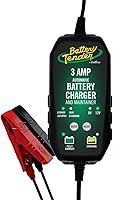
| Battery Tender 15A | varied battery sizes | 15A, 8A or 2A | 12V AGM, gel, flooded and LiFePO4 | 7.9 | |
| Clore PL2320 20A | workshop battery care | 2A, 10A or 20A | 6V and 12V lead-acid, including AGM | 7.9 |
The best AGM battery chargers by use
Choose the Genius5 for general car care, then move to another model when a specific need justifies it. Larger compatible batteries, mixed battery chemistries and engine-start assistance each point toward different options below.
NOCO Genius5: Best for everyday car care
- 5A charging
- 6V and 12V lead-acid support
- Temperature compensation
- Force Mode
A practical choice for drivers who alternate between routine charging and storage maintenance. Temperature compensation helps it adapt to changing garage conditions.
Pros
- Supports 6V and 12V lead-acid batteries
- Temperature sensor adjusts charging
- Includes clamps and eyelet terminals
Cons
- Slower replenishment than higher-output options on compatible batteries
- Force Mode needs careful manual use
The NOCO Genius5 suits a driver who wants to recharge a partly depleted car battery and keep it ready between trips. Its 5A output is a sensible middle ground when your battery allows that current and rapid replenishment is not the main goal.
It supports 6V and 12V lead-acid batteries, including AGM, plus LiFePO4. The thermal sensor adjusts charging for ambient temperature, which is useful in a garage with seasonal temperature swings.
Clamps work well when you move the charger between vehicles. The included eyelet terminals can make repeat connections easier on a battery that is awkward to reach, while the mounting bracket gives you another setup option.
Skip it if you regularly need to replace a large amount of charge in a short window. Also check small powersport batteries carefully, since an all-purpose charger still needs to meet their current limits.
Force Mode is a separate procedure for very low-voltage batteries. Use it only after confirming battery condition, voltage and the correct instructions.
CTEK MXS 5.0: Best for seasonal car storage
- 4.3A charging
- 12V lead-acid and AGM support
- 8-step automatic charging
- Float and pulse maintenance
A focused choice for a seasonal car or bike with a compatible 12V battery. Its automatic charging process moves into float and pulse maintenance.
Pros
- Automatic 8-step charging
- Float and pulse storage care
- Splash and dustproof housing
Cons
- Does not cover 6V batteries
- Modest output for replenishing larger depleted batteries
The CTEK MXS 5.0 is a strong match for a seasonal 12V car or bike whose main need is charging followed by storage maintenance. Its 4.3A output favors planned charging over a quick turnaround before a trip.
The automatic 8-step process leads into float and pulse care. That makes sense for a vehicle you use on weekends or store through part of the year, provided the battery and vehicle instructions allow the connection.
Its splash and dustproof housing is useful around a garage, but keep the electrical connection sheltered and place the unit as directed. Protection against splashes does not make a charger suitable for standing water.
Skip this model if you need 6V support or a charger for LiFePO4 batteries. The NOCO Genius5 review covers a broader chemistry option.
CTEK includes a reconditioning function, but ordinary AGM charging and reconditioning are separate choices. Check mode compatibility before using that extra function.
NOCO Genius10: Best for larger vehicle batteries
- 10A charging
- 6V and 12V lead-acid support
- Temperature compensation
- Force Mode
A stronger fit for drivers who regularly replenish larger batteries that allow its charging current. It also handles maintenance between uses.
Pros
- Higher output than the Genius5
- Temperature-adjusted charging
- Includes clamps and eyelet terminals
Cons
- Output may exceed a small battery's recommended current
- Force Mode needs careful manual use
The NOCO Genius10 fits drivers who regularly charge larger batteries that permit more current. Its 10A output can reduce the main charging stage compared with a lower-output charger on the same compatible battery.
That does not mean every charge finishes in half the time. Smart chargers reduce current near full charge, and battery condition can affect how long that final stage takes.
This model supports 6V and 12V lead-acid batteries, including AGM, as well as LiFePO4. It also includes temperature compensation, maintenance monitoring, clamps and integrated eyelet terminals.
Choose it for repeated replenishment rather than buying extra output solely for winter storage. Once a battery is full, maintaining it is a different task from replacing a large charge deficit.
Skip it for a small battery whose recommended current is below the charger's applicable output. Our NOCO Genius5 vs Genius10 comparison helps decide whether the higher-output model fits your routine.
Schumacher SC1281 6A: Best for busy home garages

- 2A to 6A charging
- 12A to 30A boost
- 100A engine start
- Battery and alternator checks
A garage tool for charging, starting assistance and basic battery or alternator checks. Choose it when those extra jobs matter alongside AGM care.
Pros
- Boost and engine-start functions
- Supports 6V and 12V batteries
- Built-in battery and alternator checks
Cons
- Weighs 12.7 lb
- Extra controls for buyers who only need storage maintenance
The Schumacher SC1281 6A suits a home garage where charging and starting assistance both matter. It combines 2A to 6A charging with separate 12A to 30A boost and 100A engine-start functions.
Those larger numbers describe different operating modes. They do not turn it into a continuous high-current charger, and engine-start use requires the sequence and duty limits in its manual.
Support for 6V and 12V batteries makes it useful around mixed equipment. Built-in battery and alternator checks also help when you need basic electrical information before deciding what to investigate next.
Choose it if those garage jobs would otherwise require another tool. At 12.7 lb, it makes more sense near a work area than as a charger you carry between distant parking spaces.
Skip it if you only need quiet storage care for one vehicle. A fault indication also calls for diagnosis, rather than repeated boost or restore attempts on a battery that will not hold charge.
CTEK NXT 5: Best for mixed battery households

- 4.3A charging
- 12V AGM, EFB and LiFePO4 support
- Automatic temperature compensation
- Connect U-terminal included
Useful for households with different compatible 12V battery chemistries. Temperature compensation and a permanent connection terminal also suit repeat charging.
Pros
- Supports AGM, EFB and LiFePO4
- Temperature compensation
- Includes a Connect U-terminal
Cons
- 12V operation only
- Recond requires separate battery compatibility checks
The CTEK NXT 5 suits a household with different 12V battery chemistries, such as AGM in one vehicle and EFB or LiFePO4 in another. It offers 4.3A charging with a separate mode choice for the battery being connected.
That range is useful when the charger moves between vehicles, but it also makes checking the selected chemistry part of every connection. Do not assume the previous setting fits the next battery.
Automatic temperature compensation adjusts charging voltage as conditions change. The included Connect U-terminal can simplify repeat access, especially when the battery sits behind a cover or in a tight space.
Choose it when broad 12V compatibility and regular maintenance matter more than faster bulk charging. Skip it if you need to cover a 6V battery or routinely replenish larger batteries on a short schedule.
Its desulphation and Recond functions need their own compatibility check. Do not treat a recovery feature as a routine step for every AGM battery.
Schumacher SC1361 6A: Best for occasional starting help

- 2A to 6A charging
- 10A boost
- 50A engine start
- 12V AGM support
A charging and maintenance option for drivers who also want occasional engine-start assistance near an outlet. It covers compatible 12V standard and AGM batteries.
Pros
- Boost and engine-start functions
- Reverse hook-up protection
- Automatic maintenance
Cons
- Does not cover 6V batteries
- Weighs 9.5 lb
The Schumacher SC1361 6A fits drivers who want occasional starting help at home alongside normal AGM charging. It provides 2A to 6A charging, with a separate 10A boost and 50A engine-start function.
It supports 12V standard and AGM batteries. Compared with the SC1281, it suits a garage that does not need 6V coverage or the broader set of diagnostic functions.
Reverse hook-up protection prevents operation when the clamps are reversed. Still check polarity before connecting, since a protection feature is a backup to the proper connection procedure.
Choose it when starting assistance would be useful near household power. It needs an AC outlet, so it does not replace a portable battery-powered jump pack for roadside use.
Skip it if your main task is maintaining a small seasonal battery and carrying the charger often. Its 9.5 lb weight and extra operating modes are harder to justify for that single job.
Battery Tender 15A: Best for varied battery sizes

- Selectable 15A, 8A and 2A output
- Selectable AGM chemistry
- LCD charging display
- Automatic float mode
Selectable output suits a household with batteries that need different charging currents. The display makes the chosen rate and chemistry easy to check.
Pros
- Three selectable charge rates
- LCD with settings and error messages
- Automatic float maintenance
Cons
- 12V operation only
- Rate and chemistry must be selected correctly
The Battery Tender 15A is useful when different batteries need different currents. Its selectable 15A, 8A and 2A settings let you choose an allowed rate instead of using the same output for every task.
It supports 12V AGM, gel, flooded and LiFePO4 batteries. Before each charge, check both the chemistry selection and the current setting, especially if someone else also uses the charger.
The LCD shows the selected rate, battery type, charge percentage and error messages. That makes it easier to confirm your choices without relying only on a status light.
Automatic float mode handles maintenance after charging. Read the percentage display as charging guidance, rather than proof that the battery still has its original capacity.
Choose it for a household with varied charging needs and a preference for visible settings. Skip it if you need 6V support, and do not assume the lowest available setting automatically suits every small battery.
Clore PL2320 20A: Best for workshop battery care

- 2A, 10A and 20A charge rates
- 6V and 12V charging
- Fully automatic operation
- Stable power supply mode
A workshop choice for compatible batteries needing different charge rates. Its separate power-supply mode adds a function beyond routine battery maintenance.
Pros
- Three selectable charging rates
- Supports 6V and 12V lead-acid batteries
- Stable power-supply mode
Cons
- Highest rate will not suit every battery
- Power-supply mode requires separate setup guidance
The Clore PL2320 20A suits a workshop with varied lead-acid batteries and a reason to use selectable output. Its 2A, 10A and 20A rates cover different charging needs when the connected battery permits them.
It supports 6V and 12V lead-acid batteries, including AGM, gel, flooded and spiral-wound types. Fully automatic operation manages its multi-phase charging process after the correct setup.
The separate stable power-supply mode is the feature that most clearly sets it apart here. It can maintain system voltage in compatible applications, but the vehicle's requirements and the charger manual must agree before you use it.
Choose this model if both battery care and that separate power-supply function have a place in your garage. Skip it if you only maintain one parked car and would never use the extra mode.
Do not leave it in power-supply mode as a substitute for automatic battery maintenance. These functions have different purposes and setup requirements.
How do you choose an AGM charger that fits your battery?
Choose by voltage, allowed current and the job you need done. Write those details down before comparing charger features so that an impressive boost figure does not distract from basic compatibility.
What makes the best battery charger for your AGM battery?
The best fit uses a charging profile approved for your battery and matches its nominal voltage. AGM is a lead-acid chemistry, but a general lead-acid label alone is not enough to confirm that every mode is suitable.
Read the battery's charging guidance for current limits and any temperature restrictions. If the battery label is unclear, identify its model and obtain the manufacturer's instructions before charging.
A charger with several chemistry modes needs the correct selection each time. Lithium and AGM settings are not interchangeable, even when both batteries carry the same nominal voltage.
How much current should you choose?
Use the battery manufacturer's allowed charging current as your limit. Capacity in amp-hours helps describe battery size, but it is not permission to apply any fixed percentage as a universal charging rule.
For example, replacing a 30Ah deficit at a steady 5A would take 6 hours in simple arithmetic. Real charging takes longer because of losses and the reduced current used near full charge.
A higher compatible rate helps most when you regularly replace a meaningful charge deficit. For storage maintenance, ease of connection and suitable automatic maintenance matter more than maximum output.
Our battery charger amp guide explains how to match output to battery size and available time.
Do you need charging, maintenance or engine-start assistance?
Choose charging to restore charge, maintenance to offset storage losses, and engine-start assistance for a separate starting task. One device may offer several functions, but you still need the right mode for each job.
A charger with starting assistance also needs mains power and the correct operating procedure. It should not be chosen solely because its largest number looks stronger than a compact smart charger's rating.
For a storage-first purchase, our guide to battery maintainers and chargers explains which function matters most.
Are you charging one battery or a connected bank?
Confirm the whole battery arrangement before connecting to multiple batteries. Two batteries in series have a different total voltage from two equivalent batteries connected in parallel.
Do not attach a charger across an unfamiliar bank based on the voltage printed on one battery. Follow the equipment maker's charging instructions, including any need to isolate batteries or use separate charging connections.
How should you set up an AGM battery charger?
Set up with the charger unplugged, using the battery, vehicle and charger instructions together. A vehicle may have designated charging points that differ from the battery terminals, particularly when it uses battery monitoring equipment.
Inspect the battery and choose a safe location
Do not charge a battery that is cracked, leaking, swollen or suspected to be frozen. Wear eye protection, remove metal jewelry and keep flames and sparks away from the work area.
AGM batteries can vent gas under fault or overcharge conditions, so use a ventilated location. Keep the charger off the battery and leave its ventilation openings clear.
Place cables where a hood, door, fan or belt cannot pinch or catch them. Keep the mains connection dry and use only an extension arrangement allowed by the charger instructions.
Connect first, then confirm the mode
Follow the specified connection order and use the vehicle's designated ground or charging point where required. Do not assume every vehicle follows the same clamp placement.
After making the connections, supply power as directed and select the correct voltage, chemistry and charging program. Confirm the settings before leaving the charger to work.
If it reports reverse polarity, poor connection or another fault, stop and correct the cause. Our car battery charging guide walks through the broader process.
Check the first charging session
Check the battery and charger during the first session rather than assuming an automatic program removes every risk. Stop charging if there is unusual heat, swelling, leakage, smoke or a strong odor.
When charging finishes, disconnect mains power before removing the leads, following the specified removal sequence. A permanent terminal harness should be installed and routed according to its instructions.
How do you care for an AGM battery between charges?
Keep the battery charged during storage and investigate repeated discharge. Charging restores energy, but it does not fix a vehicle fault that keeps draining the battery.
Short trips, accessory use while parked and long periods without driving can leave a charge deficit. A compatible automatic maintenance mode can help during storage when the vehicle and battery instructions permit it.
Check connected equipment periodically for loose terminals, worn insulation and fault indicators. Our guide to leaving a battery tender connected explains the checks that matter during longer storage.
If the battery repeatedly becomes weak soon after a full charge, arrange a battery and charging-system check. Buying a larger charger will not solve a damaged battery or persistent electrical drain.
Which AGM charging mistakes should you avoid?
Avoid wrong modes, excessive current and repeated recovery attempts. These mistakes can undermine an otherwise suitable charger choice.
- Using boost as the normal charging program: Boost and engine-start modes have separate limits and procedures.
- Selecting a chemistry by habit: Recheck the setting when moving a charger between AGM, flooded and lithium batteries.
- Using recovery mode on every charge: Reconditioning may use a different voltage profile and requires explicit battery compatibility.
- Forcing a very low-voltage battery to accept charge: Confirm its identity and condition before following any manual override procedure.
- Treating a full indicator as a health certificate: A battery can reach charging voltage yet have poor usable capacity.
- Relying on a short drive after a deep discharge: Available charging current and driving time vary, so the battery may remain partly discharged.
A battery that will not accept or retain charge needs diagnosis. Repeating special modes without resolving the cause can waste time and delay replacement when replacement is needed.
Which battery charger is best for AGM batteries?
The best battery charger for AGM batteries is the one that fits your battery's limits and your charging routine. Make the final choice by the job you perform most often.
- Pick the NOCO Genius5 for routine car charging and maintenance.
- Choose the CTEK MXS 5.0 for seasonal 12V storage, or the NXT 5 for a household with several compatible chemistries.
- Move to the NOCO Genius10 when a larger battery permits more current and charging time matters.
- Choose a Schumacher when outlet-powered starting assistance is useful.
- Pick the Battery Tender 15A for selectable rates and visible settings, or the Clore PL2320 when workshop power supply is also needed.
Before buying, confirm voltage, chemistry and allowed current against the battery manual. If storage is your main concern, use our best battery tender picks to compare options built around keeping a parked vehicle ready.
Our top 3 picks at a glance
-
1
-
2
-
3
Frequently asked questions
Can you use a battery charger on an AGM battery?
Yes, use a charger that explicitly supports AGM batteries and matches the battery voltage. Select the correct mode and stay within the battery manufacturer's charging-current limit.
AGM batteries are sealed lead-acid batteries, but that does not make every lead-acid charging program suitable for them.
What amp charger is best for an AGM battery?
The best current is one the battery manufacturer allows and that fits your charging schedule. Small batteries may need a lower rate than larger vehicle batteries.
Compare normal charging output, not engine-start or boost figures, and choose selectable current if your batteries have different requirements.
Can an AGM battery stay connected to a charger?
Yes, if the charger has an AGM-compatible maintenance mode and both manuals allow long-term connection. Automatic maintenance manages charge after the battery reaches full charge.
Check the setup periodically for loose connections, damaged cables, unusual heat or charger faults rather than leaving it unattended for an entire season.
Can a regular charger charge an AGM battery?
A regular charger can charge an AGM battery if it explicitly supports AGM chemistry and meets the battery's charging requirements. The word automatic alone is not enough to confirm compatibility.
Our guide to charging an AGM battery with a regular charger explains which details to check before connecting.
Should you use a maintainer or charger for an AGM battery?
Use a charger to replenish a discharged battery and a maintainer to keep a charged battery ready during storage. A combined smart charger can handle both jobs when its output suits the battery.
Our guide to battery maintainers and chargers explains how to choose between those functions.